It might just be noise.
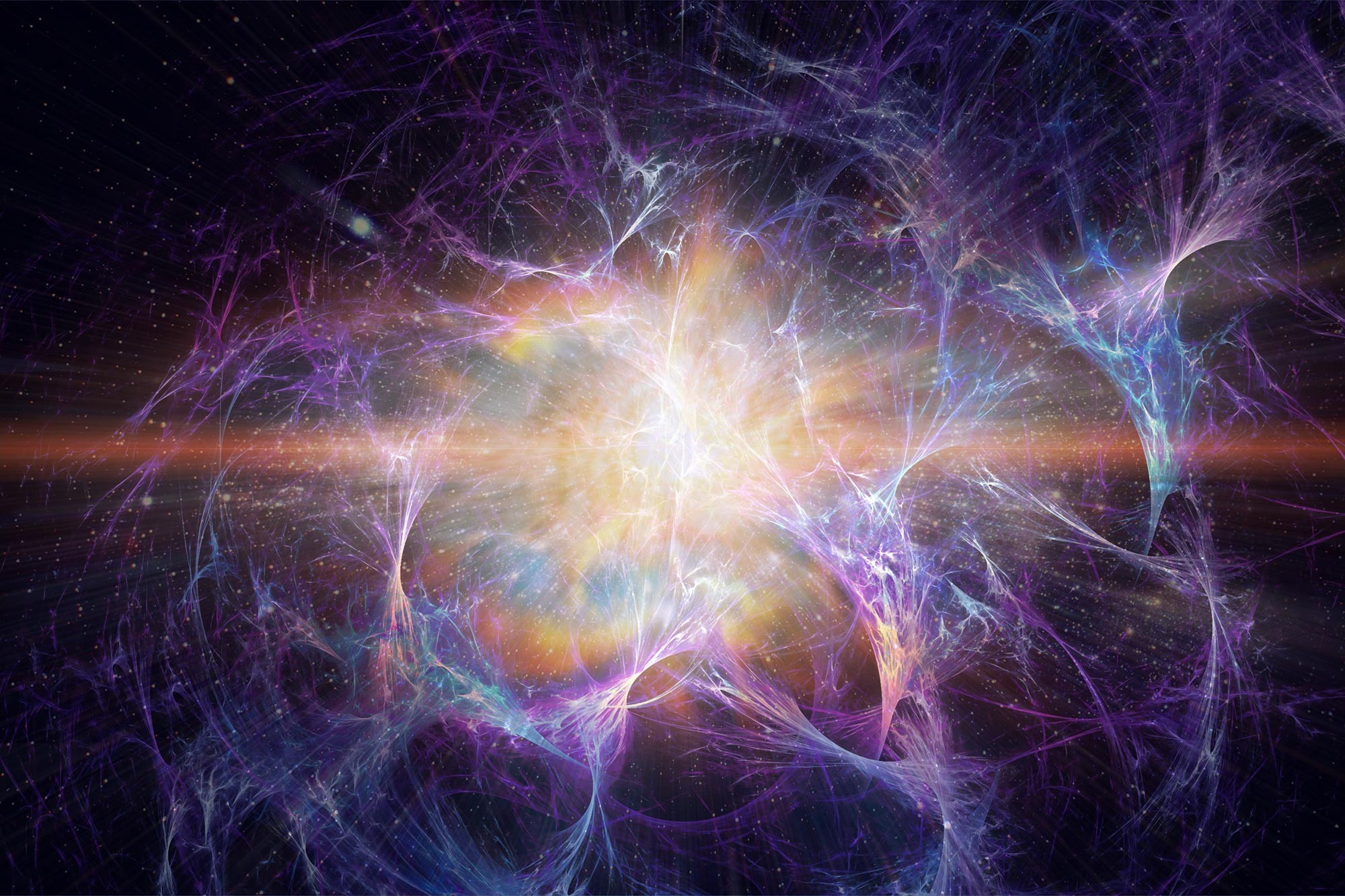
But it could also be the universe whispering secrets it hasn’t told us before. Scientists from MIT and several European partners have built a new method to scan gravitational waves for fingerprints of dark matter. Specifically, the kind of dark matter that hangs out around merging black holes.
You know how black holes merge? That event sends ripples through space-time. We catch those ripples here on Earth. Now, the theory is this: if black holes collide while wading through a thick fog of invisible matter, that fog should alter the ripples. Just slightly. Like a spoon stirring thick soup versus clear broth.
The team didn’t just guess. They built models. Simulations of two black holes dancing to death in a vacuum, and then simulations of them doing the same thing while submerged in dense clouds of dark matter. Then they went into the archives.
Public data from LIGO-Virgo-Kagoa (LVK).
They looked at the first three observing runs of these sensitive machines. Hundreds of signals. Most ignored. The researchers zoomed in on the 28 cleanest, loudest events.
Twenty-seven of them? Boring. Standard issue vacuum mergers. Nothing unexpected there.
One stood out.
GW190728. Detected July 28, 2 019. The data suggests it didn’t merge in empty space. It merged in a crowd. A dense pocket of dark matter.
Before you reach for your champagne. Hold it.
This isn’t a confirmed discovery of dark matter. Not even close. It’s a hint. A statistical preference for one model over the other. It means if you run the numbers with their dark matter template, GW19040728 fits better than it fits the vacuum model. It’s promising, yes, but it requires more evidence. Lots of it.
Josu Aurrekoetxea of MIT put it bluntly. Without tools like the one he and his team developed, we would have detected that black hole merge anyway. But we would have wrongly assumed it happened in a vacuum. We would have missed the context. Now, at least, we can ask the question properly.
Why is this even possible?
Because black holes are gravitational monsters.
Dark matter is elusive by design. It doesn’t shine. It doesn’t reflect light. It barely touches anything except gravity itself. Astronomers found out about it decades ago when they realized galaxies spun too fast. Something invisible was holding them together. We think that “something” makes up 85 percent of all the matter in the universe.
Here’s the weird physics part. Some theories say dark matter might consist of super-light particles—“light scalars.” When these particles get close to a rapidly spinning black hole, something called superradiance happens. The black hole gives its spin to the particles. It dumps rotational energy into them. This process can build up a dense cloud, a “cloud of light” essentially, around the hole.
That cloud has mass. That mass interacts with the hole before they finally crash. And that interaction? It changes the music of the collision. The gravitational waveform gets distorted.
That’s the signal Aurrekoetxea’s team hunted for.
Did GW1907219 happen near a cloud of light? The math says “maybe.” The statistics say “inconclusive.”
So why do this at all?
Because we’re running out of other places to look. We can’t see dark matter directly. We can only guess how heavy it is. This approach lets us probe scales much smaller than before.
“It is an exciting time,” Soumen Roy says, referencing the co-author who handled the data analysis.
He’s not wrong.
We are sitting here on Earth, catching gravity waves from billions of years ago, hoping for a glitch in the matrix. GW1905028 might be that glitch. Or it might just be the universe being weird for other reasons. Independent groups need to check the work. The models need refining. More data needs to roll in.
Until then, the question hangs in the air, unanswered and intriguing.
If the next merger sounds like the vacuum… does that make dark matter even stranger than we thought?