For centuries, the Voynich Manuscript – a bizarre, illustrated book filled with indecipherable text – has defied all attempts at translation. Now, a new study proposes a historically plausible cipher that could explain the manuscript’s structure, reinforcing the theory that it might be a cleverly disguised message in a known language.
The Enigma Remains
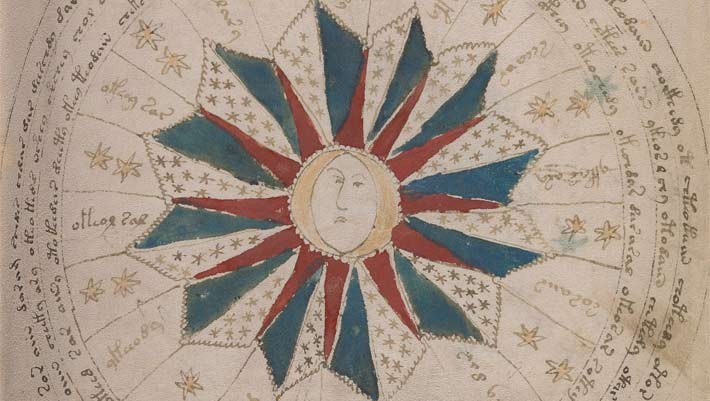
The manuscript, named after the antiquarian Wilfrid Voynich, is a small, 240-page book dating back to the early 15th century. Its pages contain botanical and scientific drawings in vibrant colors, but it’s the text that has captivated and frustrated researchers. Three main hypotheses have dominated the debate: either the manuscript is meaningless gibberish, an artificial language, or a ciphertext hiding a real language like Latin, Italian, or German.
The Naibbe Cipher: A Possible Solution
Independent researcher Michael Greshko developed the “Naibbe” cipher – named after a 14th-century Italian card game – to test the ciphertext theory. This cipher maps letters from Latin or Italian onto multiple glyphs in the Voynich manuscript’s alphabet, creating text that mimics the manuscript’s statistical properties.
The key is its simplicity: the cipher could have been executed with materials available in Europe during the early 1400s. Greshko created two versions: one using a 78-card tarot deck and another using a standard 52-card deck. Both were in use in Europe at the time, with playing cards themselves arriving via trade routes from the Mamluk Sultanate. Venice, in particular, had a thriving card-making industry during this period.
Why This Matters
The Naibbe cipher doesn’t fully replicate the manuscript’s properties, but it is the first substitution cipher that systematically explains how a ciphertext could transform Latin or Italian into something resembling the Voynich text. This reinforces the viability of the ciphertext hypothesis, meaning the manuscript could contain a hidden message in a language we already know.
“The Naibbe cipher’s very existence suggests that the Voynich manuscript may be compatible with being a Latin or Romance-language ciphertext.”
The study, published in Cryptologia in November 2025, urges further computational analysis. The mystery of the Voynich Manuscript remains unsolved, but this new cipher offers a fresh pathway towards decoding one of history’s most enduring puzzles.
Ultimately, the manuscript’s secrets may yield to persistent study, transforming the low murmur of centuries-long mystery into a clear, decipherable harmony.