


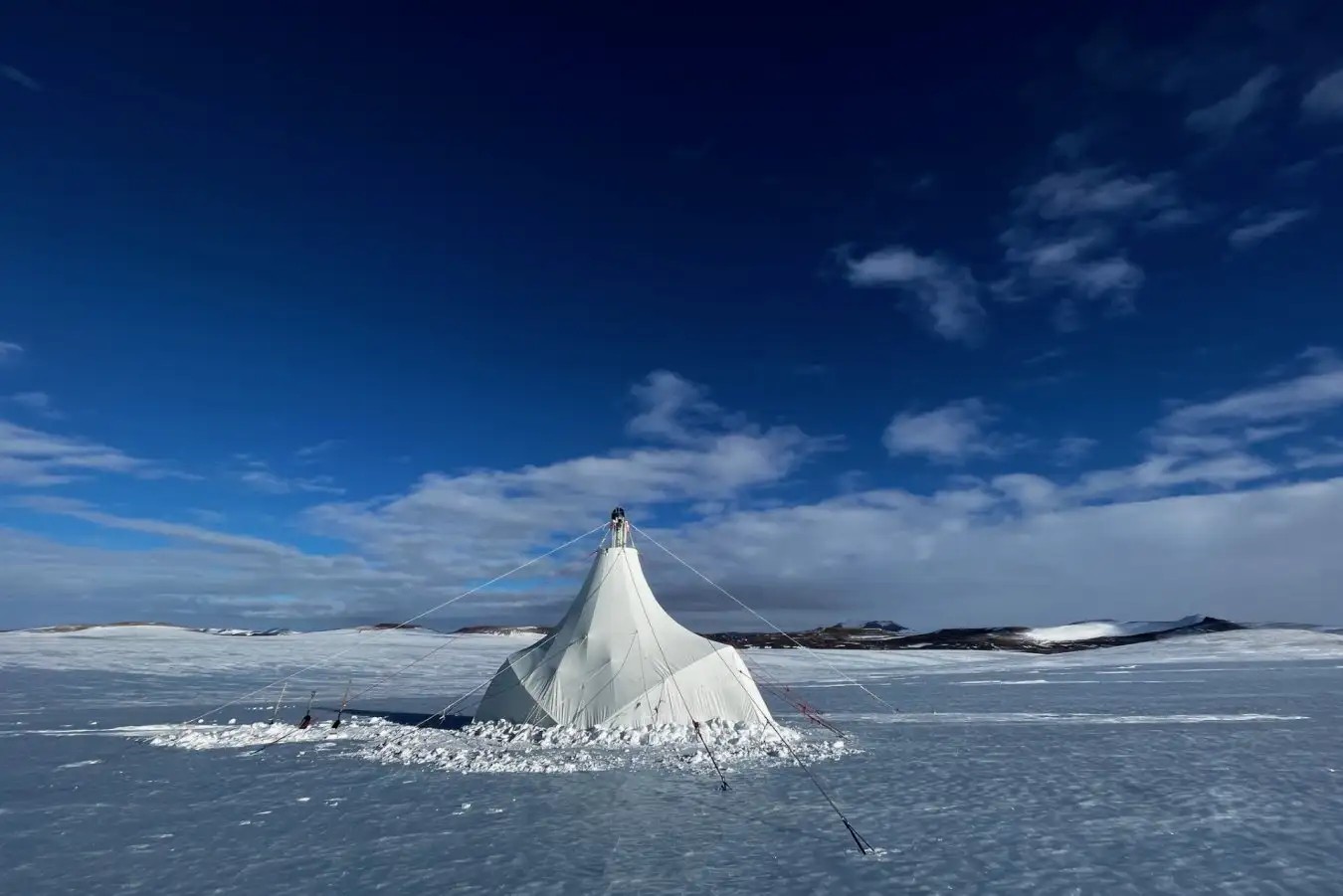
Scientists have extracted and analyzed gases trapped in 3-million-year-old Antarctic ice, providing the first direct measurement of atmospheric composition during a period known as the late Pliocene. This epoch, when global temperatures were approximately 1°C warmer than today and sea levels were up to 25 meters higher, is often cited as a warning for modern climate change. However, the new data reveals surprisingly low concentrations of carbon dioxide (CO2) and methane compared to present-day levels, suggesting Earth’s climate might be more sensitive to even minor atmospheric shifts than previously thought.
The Challenge of Ancient Ice Records
Obtaining accurate atmospheric records from millions of years ago is notoriously difficult. Traditional ice core drilling provides continuous records stretching back about 1 million years, as yearly snowfall compresses into layers of air-bubble-filled ice. For older periods, researchers must rely on “blue ice” – ancient ice exposed by wind erosion. This method introduces uncertainty, as the ice may not represent a consistent atmospheric snapshot. The recent study, led by Julia Marks-Peterson from Oregon State University, utilized this blue ice from Allan Hills, Antarctica, to measure Pliocene gas levels.
Unexpectedly Low Greenhouse Gas Concentrations
The team found CO2 levels around 250 parts per million (ppm) and methane at 507 parts per billion (ppb) approximately 3 million years ago. These figures are significantly lower than previous indirect estimates, which suggested CO2 levels closer to today’s 400 ppm and methane near 2000 ppb. During the subsequent cooling period, CO2 decreased slightly, but methane remained stable.
“We definitely were a bit surprised,” says Marks-Peterson. The findings imply that even small changes in greenhouse gases could trigger major climate shifts.
Implications for Future Climate Projections
The study raises concerns about the accuracy of current climate models. If Pliocene CO2 levels were indeed lower than previously believed, the Earth system might be even more sensitive to greenhouse gas changes. This means future warming could be more severe than predicted. However, experts caution against drawing definitive conclusions until more data is available.
Remaining Uncertainties and Future Research
While Thomas Chalk of the European Center for Research and Education in Environmental Geosciences affirms the study’s low CO2 values, he emphasizes the difficulty of interpreting them without accompanying temperature data. The ice sample doesn’t inherently indicate whether the low gas concentrations represent a cold snap, a warm spell, or an average condition.
Researchers are eagerly awaiting results from the Beyond EPICA project, which is drilling for a continuous ice record stretching back over 1 million years. Comparing the two datasets will help refine the understanding of Pliocene atmospheric conditions and improve climate models.
In conclusion, the discovery of unexpectedly low CO2 levels during a past warm period underscores the urgent need for more precise historical climate data. The findings reinforce the possibility that the Earth’s climate system is exceptionally sensitive to greenhouse gas changes, demanding a reevaluation of future warming projections.


