


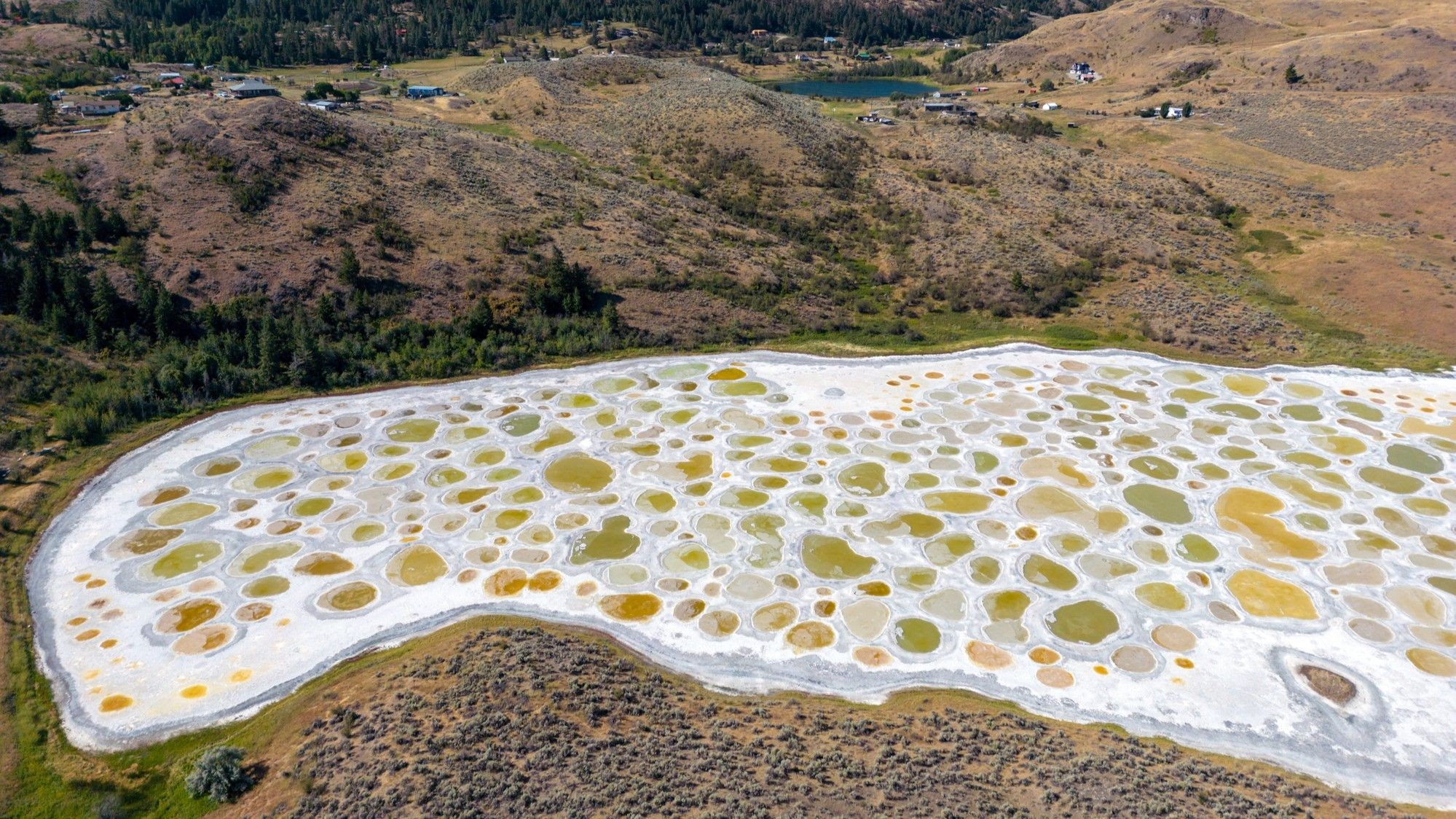
Spotted Lake, known locally as Khiluk Lake in the Nsyilxcən language, is a unique geological formation in British Columbia, Canada. The lake is famous for its striking surface patterns – colorful, polka-dotted brine pools that emerge during the summer months. These spots are not just visually interesting; they reveal a fascinating story of mineral concentration, Indigenous heritage, and even wartime resource extraction.
A Soda Lake’s Unique Chemistry
Spotted Lake is categorized as a “soda lake,” meaning its water is exceptionally salty and alkaline. This is because the lake sits in a closed basin where minerals like sodium sulfates, magnesium sulfate (Epsom salt), calcium, silver, and titanium leach from surrounding rocks and accumulate. Unlike most lakes, it has no outlet, so evaporation is the primary way water leaves the system.
As temperatures rise in spring and summer, water evaporates, leaving behind a solid crust of minerals. This creates the lake’s distinctive “spotted” appearance. The darker spots are shallow brine pools sitting atop more solidified minerals, which can appear blue, green, or yellow depending on light, mineral composition, and algae presence. The size and shape of these pools change as crystallization occurs.
A Historical Perspective
The lake’s mineral-rich nature hasn’t gone unnoticed. In the early 20th century, starting in 1916, minerals were extracted for use in World War I ammunition production. Geologist Olaf Pitt Jenkins visited the lake in 1918 and described the brine as “very heavy and very slimy like the white of an egg, and had an offensive odor.” His observations capture the lake’s raw, concentrated chemistry.
However, Spotted Lake’s story extends far beyond industrial extraction. For centuries, the Syilx People of the Okanagan Nation have revered the lake as a sacred healing ground. Each mineral circle is believed to possess unique medicinal properties, deeply embedded in their cultural traditions.
Protecting a Sacred Site
After decades of private ownership following WWI, the Canadian federal government reacquired the land in 2001 and returned it to the Okanagan Nation. Today, access to the lake itself is restricted to protect its cultural and ecological significance. A designated viewing area allows visitors to observe the stunning patterns from a respectful distance.
Spotted Lake is a reminder of how natural wonders intertwine with human history, Indigenous knowledge, and industrial needs. Its preservation ensures that future generations can appreciate this unique geological and cultural treasure.


