SpaceX’s latest astronaut mission, Crew-12, successfully docked with the International Space Station (ISS) on Valentine’s Day, February 14th, at 3:15 p.m. EST. The arrival of the four-person crew comes after a period where the ISS operated with a significantly reduced team, highlighting the growing reliance on commercial space travel to maintain continuous human presence in orbit.
Orbital Chase and Crew Arrival
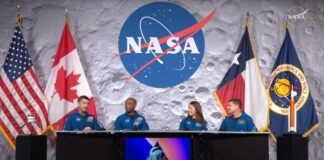
The Crew-12 mission launched from Cape Canaveral Space Force Station in Florida on February 13th aboard the “Freedom” Crew Dragon capsule. The 34-hour orbital chase culminated in a smooth docking, bringing the ISS back to near-full staffing levels. Crew-12 consists of NASA astronauts Jessica Meir and Jack Hathaway, European Space Agency’s Sophie Adenot, and Roscosmos cosmonaut Andrey Fedyaev.
This is the first spaceflight for Hathaway and Adenot, while Meir and Fedyaev are returning crew members. Fedyaev’s inclusion on the mission was a late change, replacing a cosmonaut previously removed due to potential violations of U.S. export control regulations (ITAR).
Skeleton Crew and Medical Evacuation
The timing of Crew-12’s arrival is particularly notable because the ISS recently operated with only three astronauts after Crew-11 departed a month ahead of schedule. This early departure was triggered by an unspecified medical issue with one of the astronauts, resulting in the first medical evacuation in the ISS’s over two-decade history of continuous habitation.
The reduced crew size for an extended period underscores the vulnerability of maintaining a constant human presence in space without sufficient redundancy. The ISS typically operates with a seven-person crew, a number established in 2020 after gradually increasing from an initial baseline of three in 2009 and six in 2009.
Crew Rotation and Future Missions
The Crew-12 astronauts are expected to remain on the ISS through October, completing a longer-than-usual six-month rotation. They will join NASA astronaut Chris Williams and two Roscosmos cosmonauts, Sergey Kud-Sverchkov and Sergei Mikaev, who have been operating the station with minimal support since January 15th.
The reliance on SpaceX for crew transport has become increasingly crucial as international partnerships evolve. The ISS, sustained by cooperation between nations, continues to be a symbol of scientific advancement and international collaboration in the face of logistical and political hurdles.
The ISS’s continued operation relies heavily on the reliability of commercial partnerships and the ability to adapt to unexpected challenges, such as medical emergencies or regulatory complications. Maintaining a stable crew is essential for conducting ongoing research and ensuring the station remains a viable platform for future space exploration.