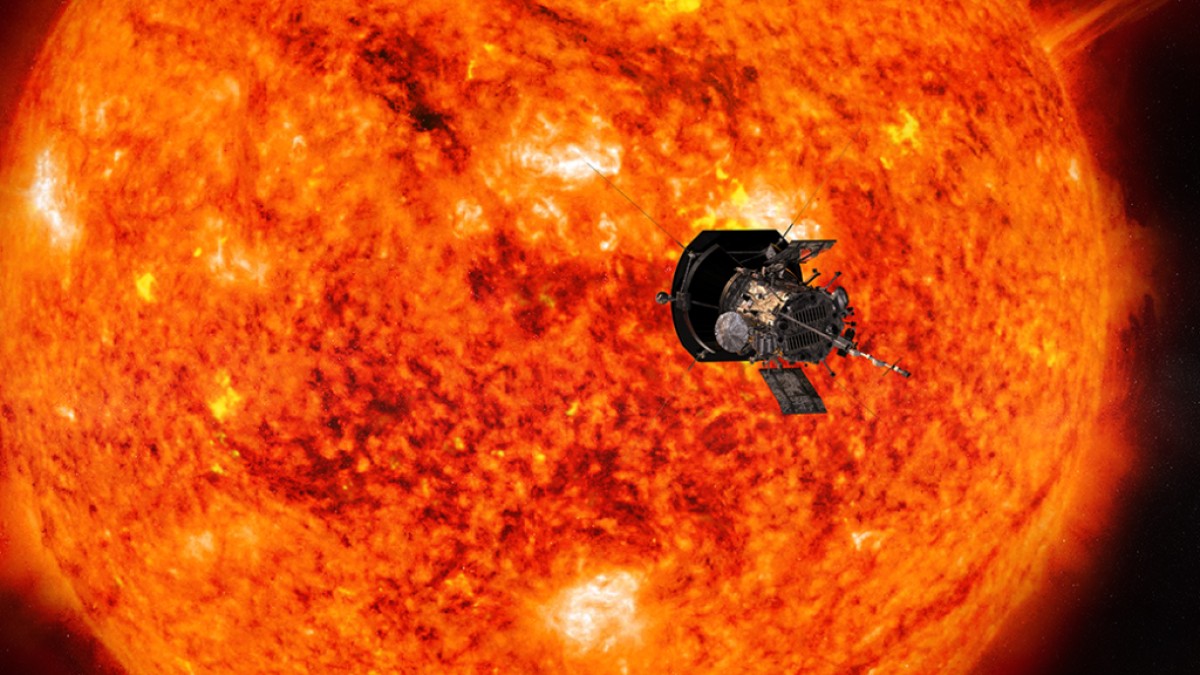
NASA’s Parker Solar Probe has once again achieved a historic milestone, completing its closest approach to the sun on December 13th, reaching within 3.8 million miles of the solar surface. This event represents the latest in a series of increasingly daring flybys designed to unravel the mysteries of our star’s corona – its outermost atmosphere.
Unprecedented Speed and Data Collection
During this perihelion passage, the probe also reached a staggering speed of 430,000 mph, equivalent to traversing from New York to Tokyo in under a minute. This velocity, combined with its proximity to the sun, allows Parker Solar Probe to gather critical data on solar wind, solar flares, and coronal mass ejections (CMEs) – phenomena that drive unpredictable space weather. The spacecraft’s four onboard instruments are actively measuring solar particles and magnetic fields, providing unprecedented insights into these processes.
Why This Matters: Space Weather and Technological Vulnerability
Understanding the sun’s behavior is not just an academic pursuit. Solar flares and CMEs can disrupt essential infrastructure on Earth, including power grids, telecommunications, and GPS systems. While Earth’s atmosphere and magnetic field offer some protection, the potential for disruption is real; a 1989 solar flare, for example, caused a 12-hour blackout in Quebec, Canada, and jammed radio communications.
Forecasting these events remains a major challenge, but Parker Solar Probe’s data is crucial in refining our predictive capabilities. The mission aims to improve our understanding of how the sun’s magnetic fields operate and how they impact our technology.
Breakthrough Discoveries: Magnetic Recycling and the Alfvén Surface
Recent data from Parker Solar Probe has revealed surprising behavior within the corona. Observations from December showed that some magnetic material ejected during a CME actually fell back towards the sun, rather than escaping into space. This “recycling” of magnetic material could reshape the solar environment and influence future eruptions.
Furthermore, the spacecraft has generated the first detailed maps of the Alfvén surface, the boundary where solar material transitions into solar wind. These maps indicate that this zone expands and becomes more irregular as solar activity increases, providing clues to how the sun’s corona functions.
Future Implications and Artemis Missions
NASA is currently evaluating Parker Solar Probe’s operational plan beyond 2026. The data collected by the mission is not only advancing our fundamental knowledge of the sun but also informing the safety protocols for future space missions, including NASA’s Artemis program.
“The insights we gain from these images are an important part of understanding and predicting how space weather moves through the solar system, especially for mission planning that ensures the safety of our Artemis astronauts traveling beyond the protective shield of our atmosphere.”
Parker Solar Probe’s continued exploration promises to reshape our understanding of the sun and its impact on Earth, paving the way for more accurate space weather forecasting and safer space travel.