For decades, scientists have observed that early pregnancy appears to lower a woman’s lifetime risk of breast cancer, yet the underlying mechanisms remained unclear. Recent research in mice suggests that a peculiar buildup of hybrid mammary cells may hold the key, and that pregnancy could act as a cellular reset, preventing their accumulation.
The Mystery of Pregnancy’s Protective Effect
The protective effect of early pregnancy on breast cancer risk has been known for some time, with studies showing that giving birth in one’s 20s may significantly reduce the chances of developing the disease later in life. However, precisely how this occurs was a puzzle. Until now, scientists lacked a clear understanding of what happens at the cellular level, particularly in older animals where the protective effects of early pregnancy become apparent.
Hybrid Cells and the Inflammatory Trigger
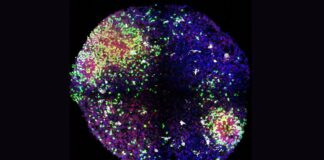
Researchers at the University of California, Santa Cruz, investigated this by comparing mammary tissue from mice that had been pregnant with those that hadn’t, at ages equivalent to 55-65 human years. They discovered that aged mice that had never been pregnant accumulated hybrid cells – cells that didn’t neatly fit into either of the two main mammary cell types, but instead displayed a mixed identity. These altered cells produce a molecule called IL33, which when injected into young mice, seemed to accelerate mammary tissue aging and promote the formation of more hybrid cells.
“These cells show all the signs of being bad, but we’re doing the experiments now to find out,” explains lead researcher Shaheen Sikandar.
This finding suggests that early pregnancy may halt the buildup of these irregular cells, potentially offering a way to prevent breast cancer development. The hybrid cells may be a key driver of cancer progression, as indicated by separate research on lung tumors showing similar cellular transformations.
What This Means, and What’s Next
The study provides a potential explanation for the long-observed link between early pregnancy and reduced breast cancer risk, but it’s crucial to remember that mice and humans are different. While the findings are promising, further research is needed to determine if these mechanisms operate identically in human breast tissue.
Mark LaBarge, a breast cancer researcher at City of Hope, acknowledges that the study sparks “cautious optimism and curiosity,” highlighting that the discovered cell population warrants further investigation. The next step is to definitively prove whether these hybrid cells drive cancer progression and if blocking their formation could prevent the disease.
This research offers a fresh perspective on breast cancer prevention, suggesting that understanding cellular changes during early pregnancy could unlock new strategies for reducing risk.