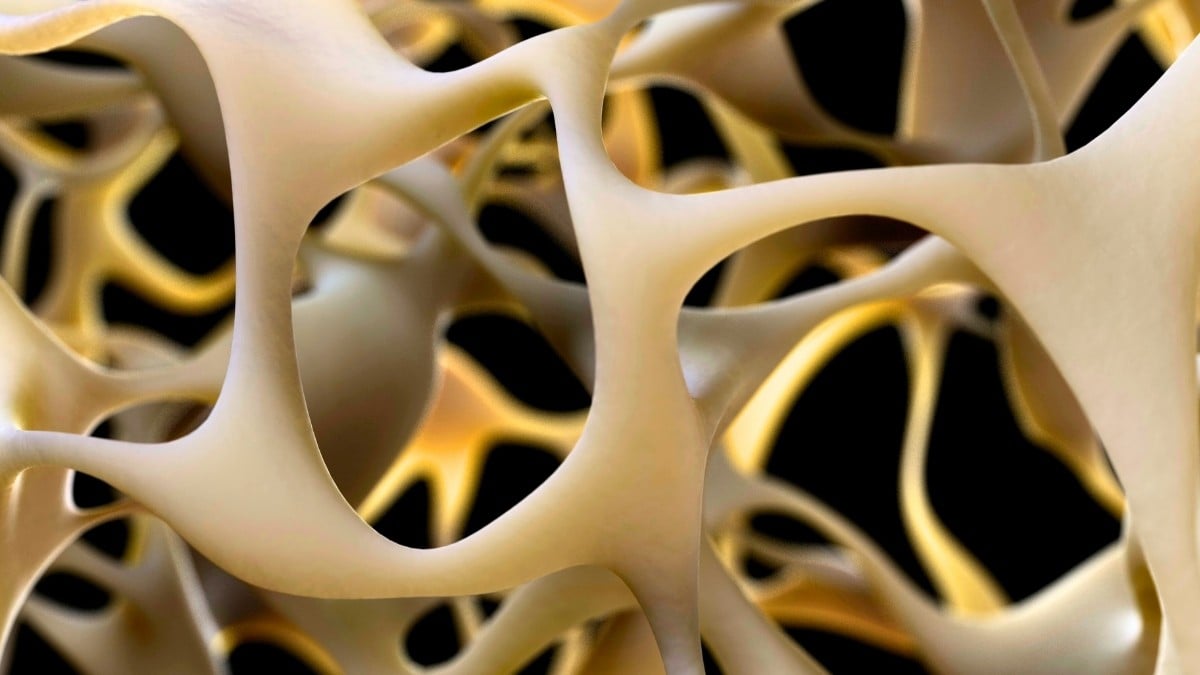
Recent research has pinpointed a crucial cellular mechanism that could revolutionize the treatment of osteoporosis, a disease affecting millions worldwide. Scientists at the University of Leipzig (Germany) and Shandong University (China) have identified the GPR133 receptor – found in bone-building cells called osteoblasts – as being essential for maintaining bone density.
The Role of GPR133 in Bone Health
Previous genetic studies hinted at a link between variations in the GPR133 gene and bone density. The current study confirms this connection, demonstrating that the presence and activation of the GPR133 receptor directly influences bone production and strength in animal models.
Key Findings: Mice lacking the GPR133 gene developed weak bones resembling osteoporosis, while those with an active receptor – stimulated by a chemical compound called AP503 – showed significant improvements in bone strength. This suggests that activating this receptor could be a viable therapeutic strategy.
Emerging Bone-Repair Technologies
Beyond GPR133, researchers are exploring innovative approaches to bone regeneration. One promising development is a blood-based implant, engineered to enhance the body’s natural healing processes. The implant, developed by an international team and tested on rats, uses synthetic peptides to strengthen the blood clot formed during injury repair, accelerating bone recovery.
This technology leverages readily available resources (blood) and offers a potentially scalable solution for bone damage repair.
Another breakthrough involves a newly discovered hormone, maternal brain hormone (MBH), found to dramatically increase bone density and strength in mice. Researchers at the University of California, San Francisco, have shown that MBH can achieve mineralization and healing outcomes previously unattainable with other methods.
Why This Matters: The Aging Population and Osteoporosis
Osteoporosis is a serious public health concern, particularly as populations age. Existing treatments can slow disease progression but rarely offer a cure or reversal of bone loss. Many current therapies also carry risks or lose effectiveness over time.
The ability to stimulate natural bone regeneration – whether through receptor activation, advanced biomaterials, or hormonal interventions – holds the potential to fundamentally change how we approach this condition.
The convergence of these findings signals a shift toward more effective and potentially curative treatments for bone-related disorders. While these breakthroughs are largely based on animal studies, the underlying biological mechanisms are likely conserved in humans. Future research will focus on translating these discoveries into safe and effective therapies for clinical use.
The research was published in Signal Transduction and Targeted Therapy.