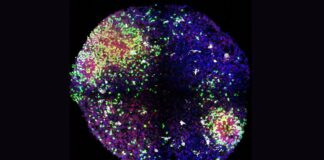
Researchers at Case Western Reserve University have identified a key mechanism driving the progression of Parkinson’s disease: a direct interaction between toxic proteins and the brain’s cellular powerhouses (mitochondria). This discovery fills a critical gap in our understanding of the disease, offering a new target for potential treatments.
The Missing Link Explained
For years, scientists have known that abnormal clumps of a protein called alpha-synuclein damage neurons in Parkinson’s patients. Simultaneously, these patients exhibit weakened mitochondrial function, leading to energy deficits in brain cells. While these two problems were linked, the exact how remained elusive. This new study clarifies that alpha-synuclein actively disrupts mitochondrial function by binding to an enzyme called ClpP, which is responsible for clearing cellular waste.
This interaction essentially disables the mitochondria, leading to the hallmark symptoms of Parkinson’s – including reduced dopamine production and motor impairment. The significance of this finding is that it provides a concrete molecular pathway to target with therapies.
A Potential Treatment: CS2 Protein Decoy
The team didn’t stop at identifying the problem; they also engineered a solution. A short protein fragment, dubbed CS2, was designed to act as a “decoy,” diverting alpha-synuclein away from ClpP and allowing mitochondria to function normally.
“We’ve uncovered a harmful interaction between proteins that damages the brain’s cellular powerhouses… and developed a targeted approach that can block this interaction.” – Xin Qi, neuroscientist
Initial tests using human brain tissue, mouse models, and lab-grown neurons yielded promising results. CS2 reduced inflammation and partially restored motor and cognitive function in animals. This suggests that targeting this specific biochemical reaction could be a more effective approach than simply treating Parkinson’s symptoms.
Timeline and Caveats
Human clinical trials are still at least five years away. Biological interventions of this kind require extensive safety testing to rule out unintended consequences. However, the study’s dual achievement – identifying a fundamental fault in Parkinson’s progression and demonstrating a potential repair mechanism – marks a significant step forward.
Parkinson’s is a notoriously complex disease with multiple contributing factors. It is unlikely that one single treatment will offer a complete cure; however, therapies aimed at restoring mitochondrial function could dramatically improve the quality of life for millions suffering from this condition.
Researchers are optimistic that future treatments may transform Parkinson’s from a debilitating, progressive illness into a manageable or even resolved one.