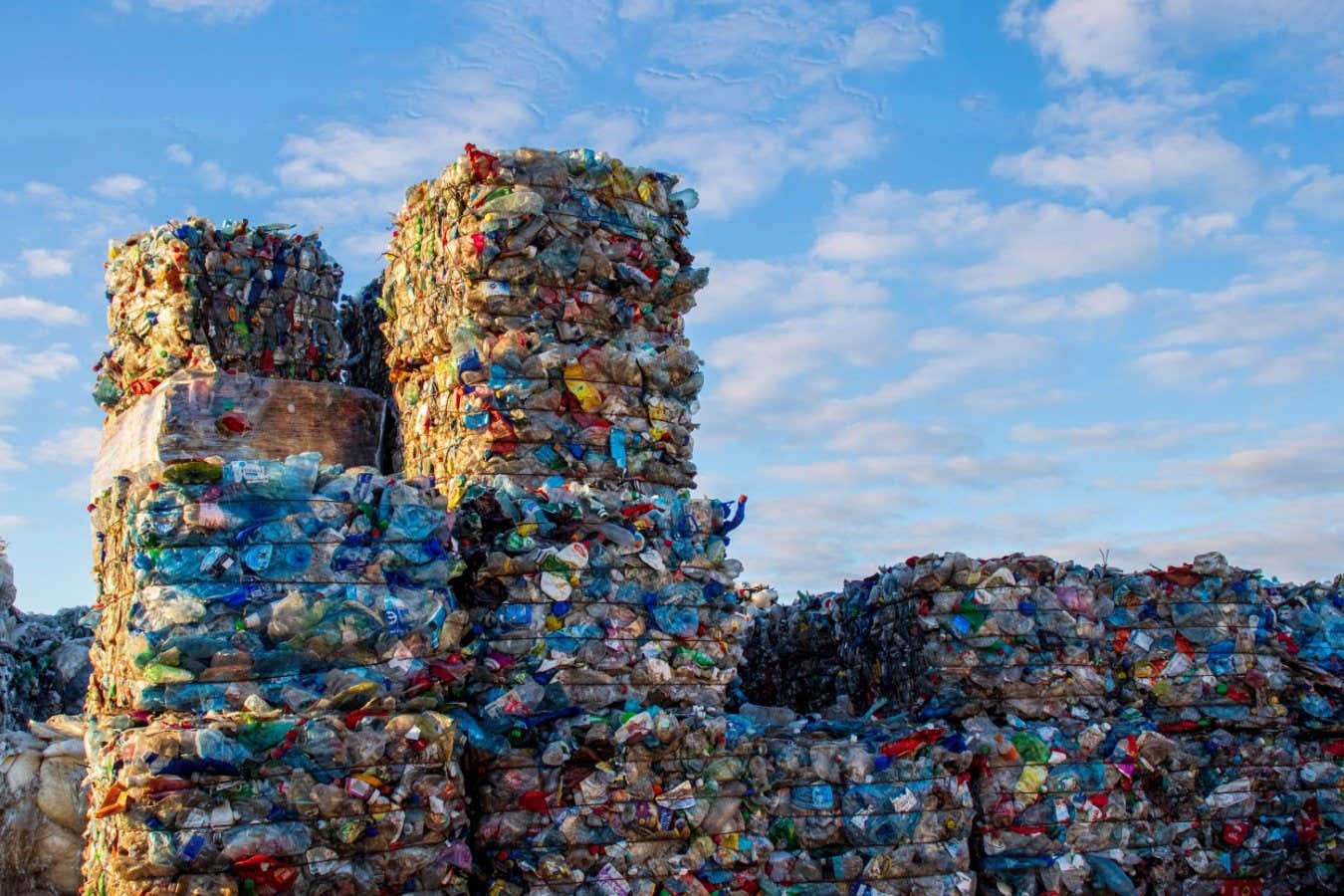
A new technique allows plastics to be designed with pre-set lifespans, potentially solving the global waste crisis. Researchers are developing plastics that break down in weeks, months, or years instead of persisting for centuries. The innovation lies in mimicking the natural self-degradation processes found in biological polymers like DNA.
The Plastic Waste Problem: A Global Crisis
In 2022, over 250 million tonnes of plastic were discarded worldwide, with only 14% recycled. The remainder ended up in landfills or incinerators, contributing to pollution and environmental damage. While biodegradable plastics have been pursued for decades using materials like bamboo and seaweed, many are impractical for large-scale composting or falsely advertised as fully degradable.
How Programmable Degradation Works
Yuwei Gu and his team at Rutgers University have devised a method to embed synthetic “neighboring groups” into plastic polymers. These chemical structures trigger internal reactions – nucleophilic attacks – that sever the bonds within the plastic chains. Natural polymers like DNA already employ this process, breaking down relatively quickly. By adjusting the structure of these additives, researchers can control the material’s lifespan with precision.
“This strategy works best for plastics that benefit from controlled degradation over days to months, so we see strong potential for applications like food packaging and other short-lived consumer materials,” says Gu.
The Future of Plastic: Controlled Lifecycles
Once broken down, the plastic fragments can either be repurposed for new materials or safely dissolve into the environment. The technique is ideally suited for short-term consumer products like food packaging, reducing long-term waste. However, it is currently less effective for durable applications like construction materials that require decades of stability.
Remaining Challenges
Commercial viability still faces hurdles. The resulting breakdown creates a “soup” of polymer fragments, requiring thorough toxicity testing before widespread use. Currently, the process relies on ultraviolet light to initiate degradation, meaning buried or covered plastics will remain intact. Finding ways to trigger self-destruction in darkness is the next step.
The development of programmable plastics represents a significant leap toward a sustainable future, but further research and testing are crucial to ensure safe and effective implementation. If these challenges are overcome, the technology could dramatically reduce plastic pollution and reshape the industry.