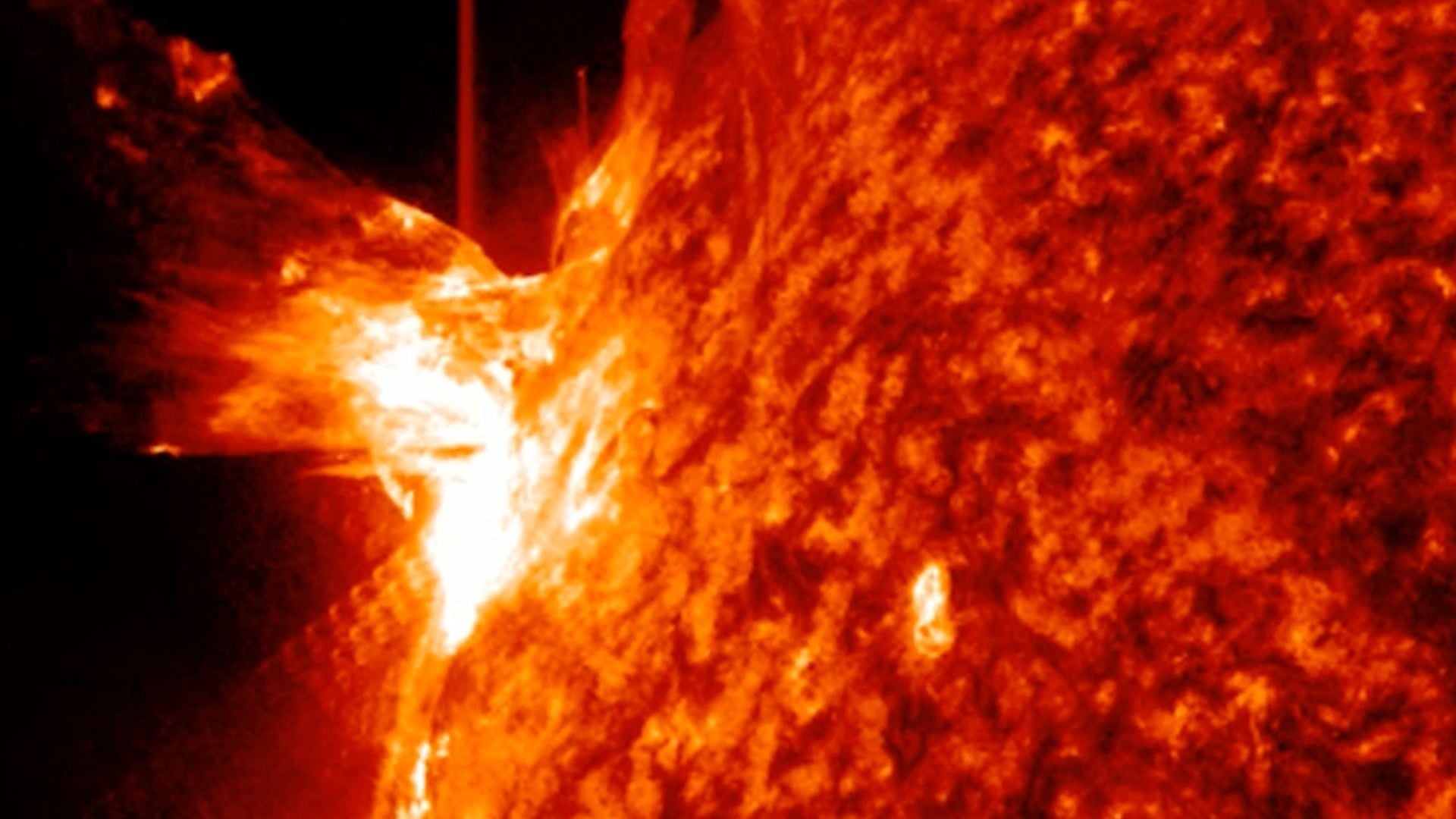
A significant solar flare erupted from the sun on November 30th, causing a temporary radio blackout across Australia and parts of Southeast Asia. The flare, classified as X1.9 – the strongest category – peaked at 9:49 a.m. EST and originated from a newly visible sunspot region, AR429.
The immediate impact was disruption of high-frequency radio communications, vital for aviation, maritime, and emergency services. While the flare itself subsided quickly, a related coronal mass ejection (CME) – a massive burst of solar plasma – was observed, though current models indicate it is not directly aimed at Earth.
However, the more concerning development is the emergence of a massive and complex sunspot cluster, AR4294. This region is so large and magnetically unstable that it has been split into three separate numbered groups by the National Oceanic and Atmospheric Administration (NOAA). AR4294 is already responsible for multiple X-class flares in the past month, and it is continuing to grow as it rotates towards Earth.
NOAA forecasters predict a high probability of further M-class flares (moderate strength) and a moderate chance of additional X-class flares over the next few days (December 1-3). While no direct CME threat currently exists, the increasing activity from AR4294 could alter this forecast rapidly.
Beyond immediate flares, a coronal hole stream is expected to bring minor geomagnetic disturbances (G1-level) around December 3rd, potentially causing slight disruptions to satellite operations and power grids.
The sun’s activity is cyclical, but the size and complexity of AR4294 suggest a period of heightened solar flares is likely in the coming weeks, requiring continued monitoring from space weather agencies.