The International Space Station (ISS) underwent a change of command today, January 12th, in preparation for the unprecedented early departure of SpaceX’s Crew-11 mission. The decision, made on January 9th, comes due to an undisclosed medical emergency affecting one of the astronauts – marking the first time in ISS history that a crew is returning early for medical reasons.
The Unexpected Turn
The situation unfolded rapidly after a planned spacewalk was canceled due to “medical concerns.” NASA has not released details to protect the astronaut’s privacy. However, the agency quickly adjusted schedules to expedite Crew-11’s return. This is significant because ISS rotations are carefully planned to ensure continuous operations and research.
Command Transfer
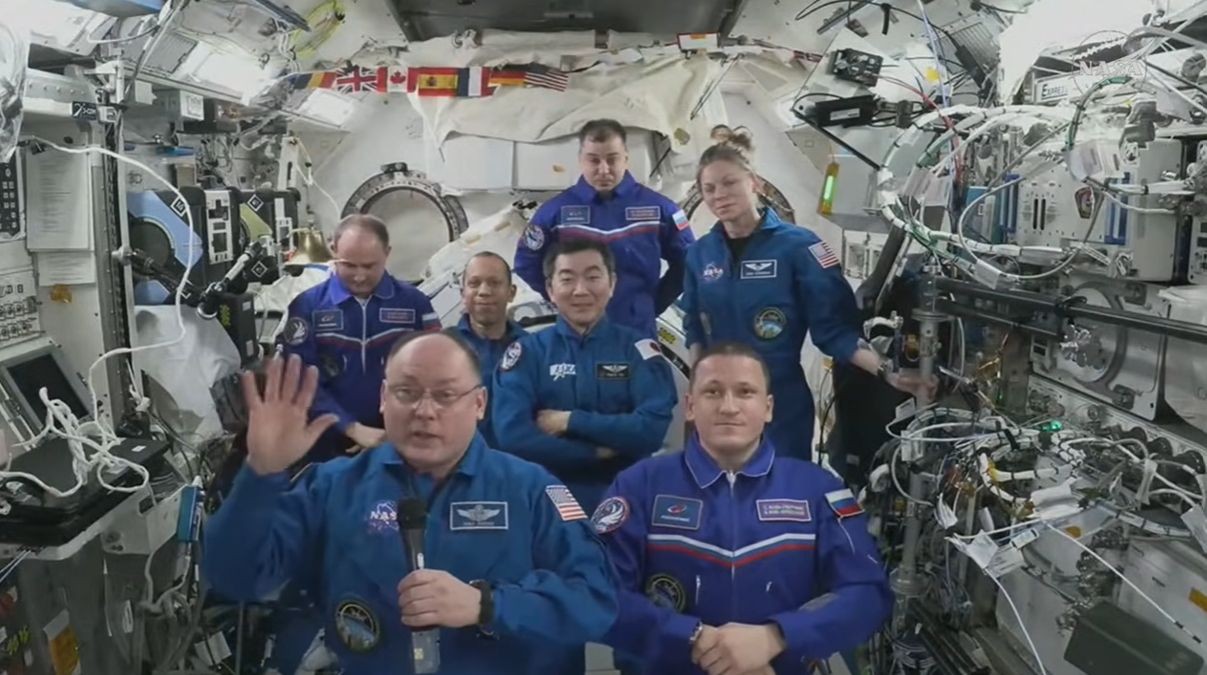
Before departing, the crew formally transferred command of the orbital lab from NASA astronaut Mike Fincke to Russian cosmonaut Sergey Kud-Sverchkov. The ceremony, livestreamed from the Japanese laboratory module, included heartfelt remarks from the departing astronauts.
“It’s bittersweet,” said Fincke during the transfer. “Sergey, it’s an honor and a pleasure to hand over command to you.”
The symbolic passing of a metal “key” underscored the shift in responsibility. This ritual is a standard part of ISS crew rotations but takes on added weight given the unusual circumstances.
Departure Timeline
Crew-11 is set to undock from the ISS Wednesday afternoon, January 14th, aboard SpaceX’s Crew Dragon Endeavour. Departure coverage will begin at 3 p.m. EST (2000 GMT), with undocking scheduled for 5 p.m. EST (2200 GMT). The spacecraft will then execute an 11-hour deorbit burn, splashing down in the Pacific Ocean around 3:40 a.m. EST (0840 GMT) on Thursday.
Crew Composition and Impact
Launched on August 1st, 2025, Crew-11 consisted of Fincke and Zena Cardman (NASA), Oleg Platonov (Russia), and Kimiya Yui (Japan). Their early return leaves Expedition 74 with a reduced crew of three, including NASA astronaut Chris Williams as the sole American aboard.
This situation highlights the importance of redundancy in space operations. NASA typically overlaps crews to maintain continuity for maintenance and research. However, the medical urgency outweighed these considerations, prompting an immediate evacuation. The Crew-12 mission, expected to launch in mid-February, will now be critical to restoring full operational capacity.
The early return of Crew-11 underscores that even with decades of ISS operation, unforeseen medical emergencies can disrupt carefully laid plans. This event emphasizes the risks inherent in long-duration spaceflight and the need for robust contingency procedures.