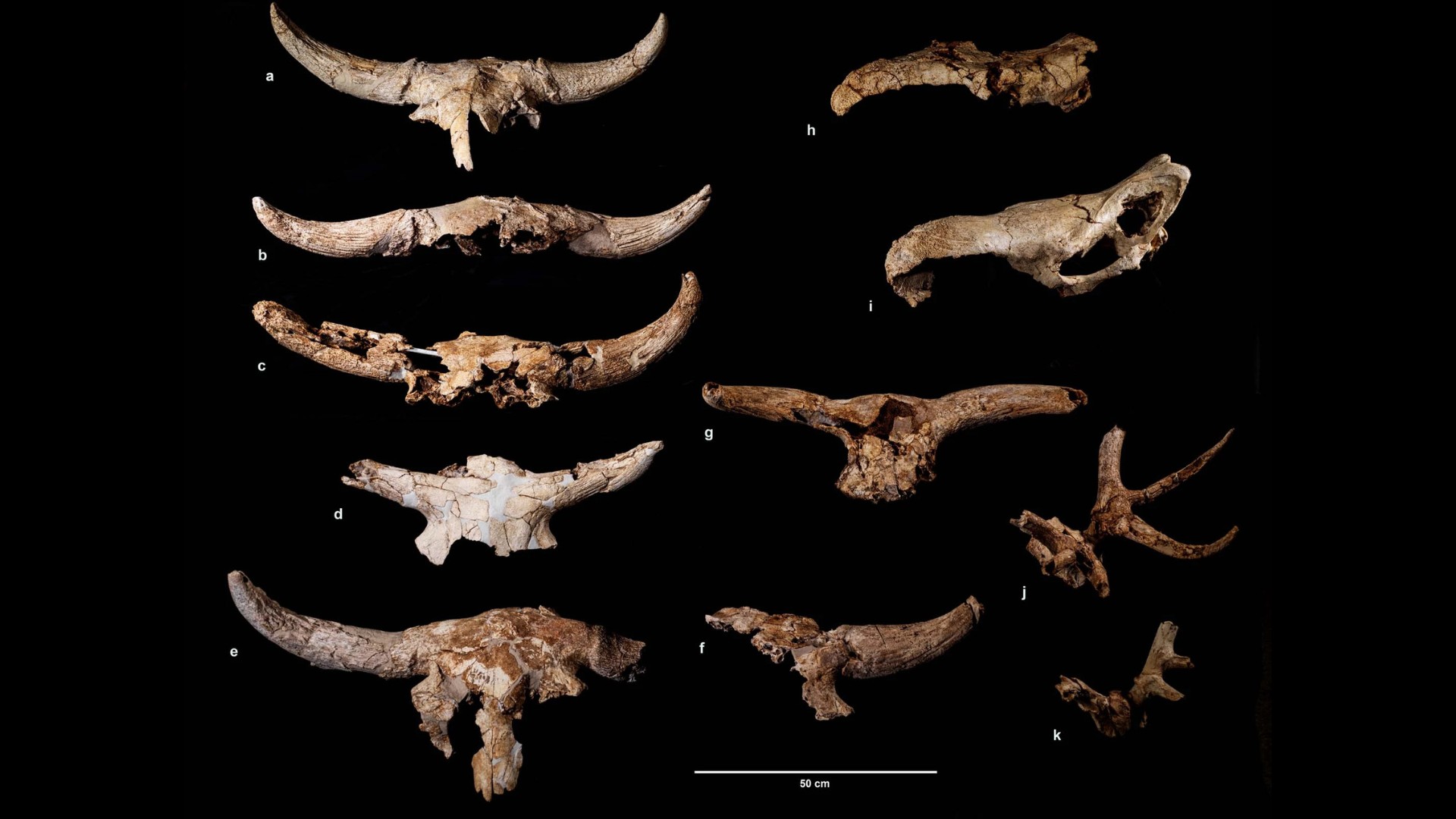
More than 43,000 years ago, Neanderthals engaged in a mysterious practice: the repeated collection and deliberate placement of animal skulls—specifically those with horns or antlers—deep inside a cave in what is now Spain. This behavior wasn’t linked to food, tools, or shelter, but appears to be an early form of cultural expression, challenging previous assumptions about Neanderthal cognitive abilities.
The Discovery at Des-Cubierta Cave
The site, Des-Cubierta cave, was first excavated in 2009, but it wasn’t until 2023 that researchers began to recognize the peculiar arrangement of over 35 large mammal skulls found within. Crucially, the jaw bones were missing from almost all specimens, and the selection favored horned and antlered species like steppe bison and aurochs.
The cave also contained over 1,400 stone tools characteristic of Neanderthal Mousterian technology, further confirming their presence.
Separating Human Action From Natural Events
Initial observations suggested random accumulation, but a detailed analysis by archaeologist Lucía Villaescusa Fernández and her team revealed a deliberate pattern. The researchers meticulously distinguished between the effects of natural rockfalls over millennia and the purposeful actions of Neanderthals.
This is a critical step in archaeology: accurately identifying human-caused deposits versus natural ones. The study, published in the Archaeological and Anthropological Sciences journal, found that the skulls were intentionally positioned, not merely deposited by geological processes.
Long-Term, Ritualistic Behavior
The team’s spatial mapping demonstrated that the Neanderthals repeatedly collected and placed the skulls over extended periods, especially during colder periods between 135,000 and 43,000 years ago. This suggests the practice was sustained across generations, independent of immediate survival needs like food or resource acquisition.
The repeated nature of the skull deposits implies a tradition—a non-economic, cultural behavior passed down through time.
Implications for Understanding Neanderthal Culture
The purpose behind this behavior remains unknown, but the deliberate selection and placement of skulls in a cave not used as a dwelling suggests a capacity for symbolic thought that transcends basic survival.
As archaeologist Ludovic Slimak notes, this finding shifts the focus from whether Neanderthals were “symbolic like us” to what unique forms of meaning they developed independently. This evidence suggests that Neanderthal cultures were complex and structured in ways distinct from those of Homo sapiens.
“This site suggests that Neanderthal worlds of meaning existed, but they may have been structured very differently from those of Homo sapiens,” Slimak argues.
The discovery forces a reassessment of Neanderthal societies, highlighting their capacity for cultural transmission and shared traditions. It is a rare, solid piece of evidence that confirms Neanderthals were capable of symbolic behaviors separate from basic survival needs, pushing the boundaries of our understanding of this extinct human relative.