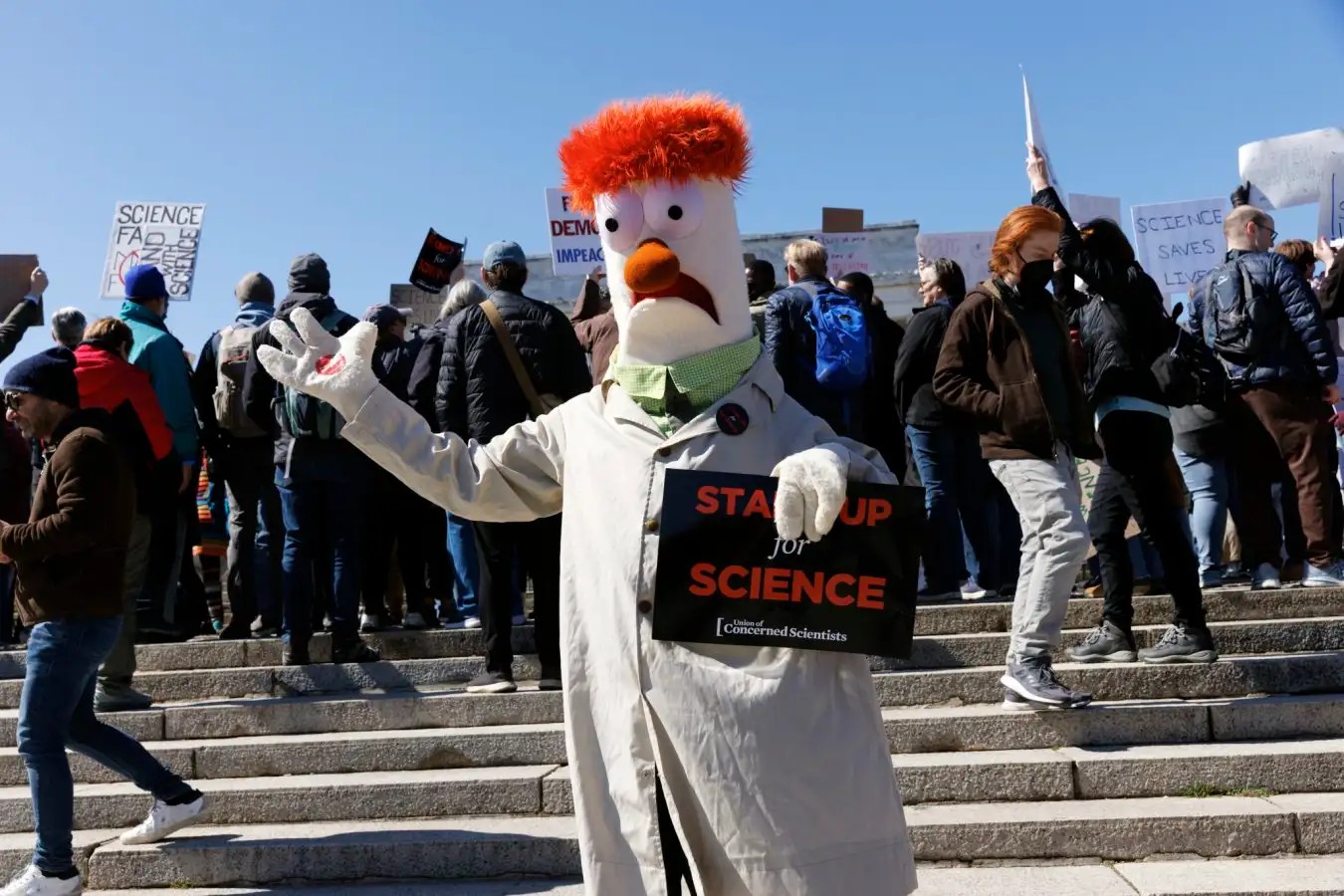
Despite facing unprecedented headwinds, scientific progress continued in 2025, delivering remarkable discoveries alongside stark reminders of the forces undermining its foundation. From political interference to commercial exploitation and systemic inaction on climate change, the past year highlighted both the power and the fragility of evidence-based inquiry.
The Assault on Scientific Integrity
The year began with a chilling reality: science was increasingly under siege. The Trump administration’s dismantling of U.S. science funding dealt a severe blow, potentially setting back decades of research and innovation. This isn’t merely an American issue; the U.S. historically drives global scientific advancement, and its decline impacts everyone. Beyond government action, commercial interests also threatened scientific rigor. Companies like Colossal Biosciences blurred the line between spectacle and substance with claims of “de-extinction,” releasing genetically modified wolves while independent verification lagged.
Similar sensationalism plagued the UK documentary Hitler’s DNA, which sequenced the Nazi dictator’s genome but presented speculative interpretations without peer-reviewed publication. This highlights a disturbing trend: the prioritization of sensationalism over verified facts. The rush to publish flashy findings before rigorous scrutiny erodes public trust in science itself.
Climate Policy: A Decade of Broken Promises
Perhaps the most damning example of science under siege was the failure of global climate policy. Despite a decade of pledges under the Paris Agreement, the world failed to meet its own targets. The COP30 summit in Brazil ended without even a commitment to phase out fossil fuels, demonstrating that political will continues to lag far behind scientific necessity. This disconnect isn’t new, but the repeated failure to act despite overwhelming evidence underscores a deeper systemic problem: short-term political interests consistently trump long-term survival.
Breakthroughs Amidst the Chaos
Despite these challenges, science delivered remarkable achievements. The 100th anniversary of quantum mechanics was marked by the experimental confirmation of a century-old debate between Einstein and Bohr, proving the bizarre nature of reality. GLP-1 drugs continued to show promise beyond weight loss, offering potential breakthroughs in treating a range of conditions. And, remarkably, some people experienced a brand-new color for the first time, pushing the boundaries of human perception.
These advancements serve as a potent reminder of science’s power, even when facing obstruction. The year also offered lighter fare: from the evolution of tickling to the discovery of the world’s oldest beer, science continued to delight and intrigue.
A Call to Action
The year 2025 was a paradox: a time of both wonder and warning. Despite setbacks, scientific inquiry remains the most reliable tool for understanding and improving the world. But its future depends on resisting skepticism, demanding rigor, and prioritizing evidence over spectacle. Science is not merely a collection of facts; it is a method for navigating uncertainty, and its defense is vital for any society that values progress.
As we move into 2026, the need to protect scientific integrity and accelerate action on global challenges has never been greater.