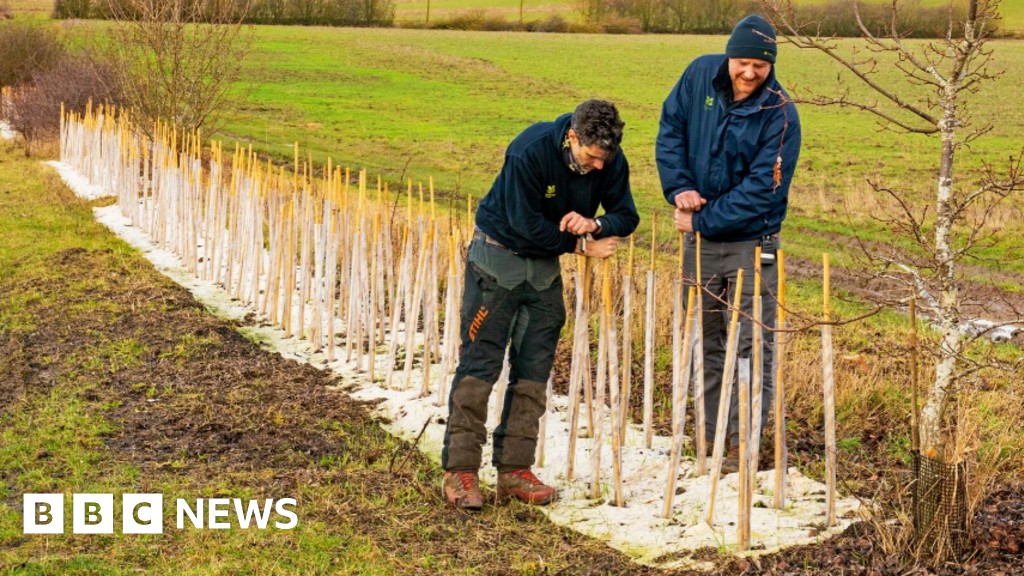
The National Trust is undertaking a decade-long initiative to restore 23 kilometers (14 miles) of hedgerows across its 1,000-hectare Wimpole Hall estate in Cambridgeshire. This large-scale project aims to bolster biodiversity, enhance the farm’s resilience to erosion and fire, and create a more connected ecological landscape.
Why Hedgerows Matter
Hedgerows are far more than just scenic boundaries; they form vital wildlife corridors, support farmland ecosystems, and play a crucial role in climate adaptation. The decline of hedgerows over the past century has directly contributed to the loss of farmland birds and overall habitat fragmentation. Restoring them is a practical step toward reversing this trend.
The Wimpole Restoration Plan
The project includes three key phases:
– Coppicing : Managing 10% of existing hedges to stimulate regrowth.
– Hedgelaying : Laying 6.7 kilometers (4.1 miles) of existing hedges to promote denser growth.
– Planting : Adding 13.8 kilometers (8.6 miles) of new hedgerow, using approximately 83,000 native trees and shrubs.
These traditional techniques, though sometimes appearing drastic, encourage rapid and robust regrowth, improving the hedgerows’ functionality. This winter alone, volunteers and staff have already planted 30,000 trees and worked on 2.3 kilometers (1.4 miles) of existing hedgerow.
Benefits Beyond Biodiversity
The restored hedgerows will provide essential shelter and food for threatened farmland birds such as corn buntings, yellowhammers, and linnets. They also support wintering species like fieldfares and redwings. Beyond wildlife benefits, hedgerows act as natural firebreaks for the working farm and help stabilize soil against erosion, which is increasingly important given climate change.
As Wimpole’s farm manager Dave Hassall explains, each restored section builds upon the larger network, creating a more resilient, interconnected system.
The National Trust’s investment in hedgerow restoration underscores the growing recognition of nature-based solutions for both conservation and agricultural sustainability. The project at Wimpole Estate serves as a model for how landscape-scale restoration can benefit biodiversity, climate resilience, and working farmlands alike.