


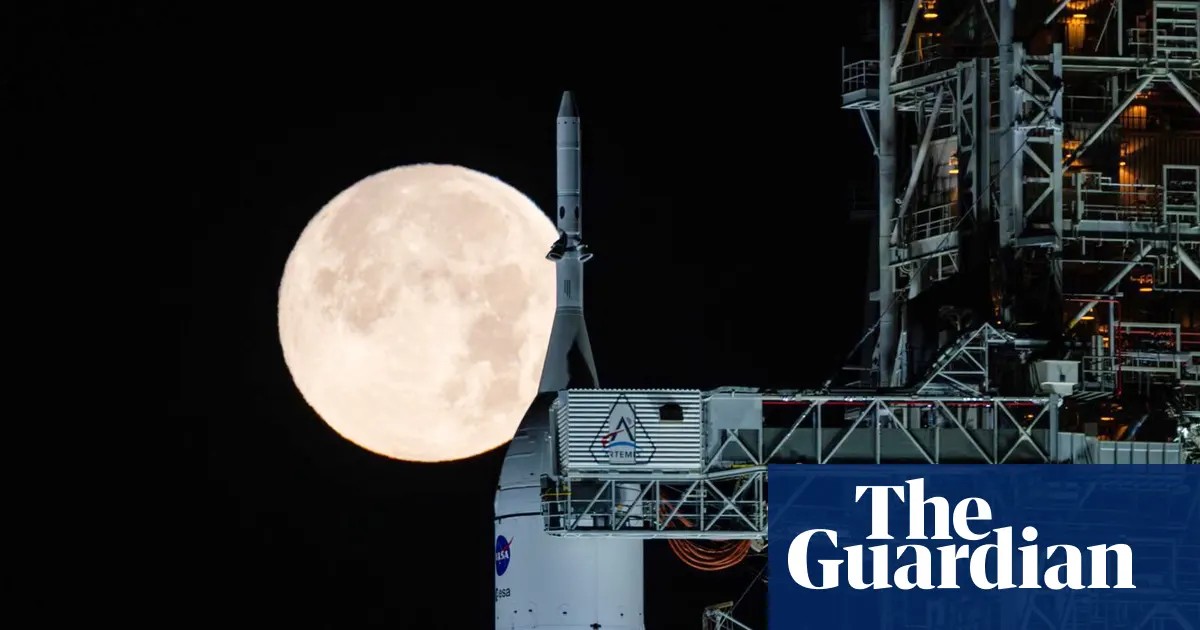
NASA has delayed the highly anticipated Artemis II mission, designed to send astronauts around the moon and back, by at least a month. The postponement comes after engineers detected hydrogen leaks during a critical “wet dress rehearsal” test of the Space Launch System (SLS) rocket at Kennedy Space Center in Florida.
Testing Reveals Recurring Issues
During the two-day simulation of launch procedures, teams identified leaking hydrogen fuel and a problem with a valve on the Orion capsule – the spacecraft where four astronauts will live and work during the 10-day mission. NASA stated engineers overcame “several challenges” during testing but require further review of collected data before proceeding.
This isn’t the first time hydrogen leaks have plagued NASA’s new heavy-lift rocket. The uncrewed Artemis I mission in 2022 also experienced similar issues during pre-flight checks. The SLS, though powerful, appears to be sensitive to the extreme cold and pressure of its cryogenic propellants.
Crew Impact and Historical Significance
The delay is a setback for the Artemis II crew, who have already spent nearly two weeks in quarantine to prevent illness before the mission. This mission carries significant weight:
* Christina Koch and Victor Glover are slated to become the first woman and first person of color, respectively, to venture beyond low Earth orbit.
* Jeremy Hansen, a Canadian astronaut, would become the first non-American to travel to the vicinity of the moon.
The mission itself is a landmark event, representing the first crewed lunar flyby since Apollo 17 in 1972. Artemis II is a stepping stone towards Artemis III, which aims to land astronauts near the lunar south pole. NASA’s long-term goal is to establish a permanent human presence on the moon, leveraging its resources and preparing for future missions to Mars.
What’s Next?
NASA has not yet set a new launch date, but indicated it would likely fall sometime in March. The crew will re-enter quarantine approximately two weeks before the next launch attempt. The agency previously identified multiple potential launch windows between February and the end of April.
The repeated issues with hydrogen leaks highlight the challenges of using cryogenic fuels for deep-space missions. Resolving these issues is critical for NASA’s ambitious Artemis program and its goal of sustained lunar exploration.
The Artemis II delay is a reminder that even with decades of spaceflight experience, complex engineering systems can still present unexpected hurdles. NASA’s continued testing and refinement of the SLS will be vital for ensuring crew safety and mission success.


