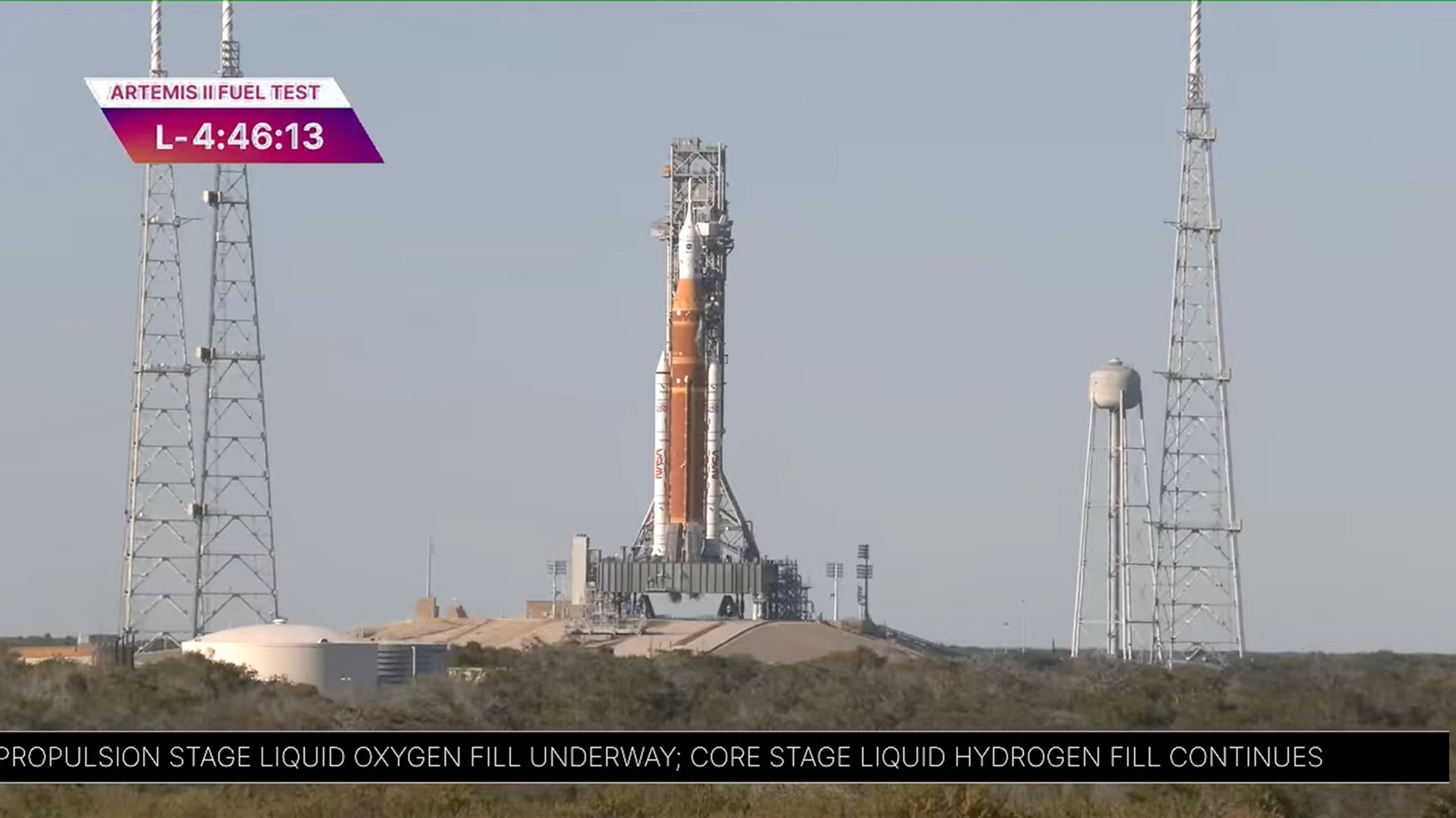
NASA conducted a critical fueling test of its Space Launch System (SLS) rocket for the Artemis 2 mission on February 2, encountering minor leaks but ultimately completing the process. The test, a full “wet dress rehearsal,” simulated launch operations at Kennedy Space Center’s Pad 39B in Florida, loading over 700,000 gallons of cryogenic liquid hydrogen (LH2) and liquid oxygen (LOX) into the rocket’s stages.
Leaks and Troubleshooting
The fueling process was briefly halted twice due to LH2 leaks, a common issue given the molecule’s small size and tendency to escape through even tiny fissures. Engineers addressed the leaks promptly, demonstrating NASA’s improved procedures based on lessons from the Artemis 1 mission, which faced similar delays. This highlights a significant pattern: cryogenic fuel systems are inherently prone to leakage, requiring meticulous engineering and ongoing monitoring.
Artemis 2 Mission Details
The SLS rocket is slated to launch on February 8 (though this is subject to change), carrying astronauts Reid Wiseman, Victor Glover, Christina Koch, and Canada’s Jeremy Hansen on a ten-day lunar orbit mission. The mission’s success hinges on the outcome of the current wet dress rehearsal, along with favorable weather conditions. This is the first crewed Artemis mission, representing a major step in NASA’s long-term lunar exploration program.
Historical Context and Future Implications
Leaks plagued the Artemis 1 launch campaign in 2022, delaying liftoff by several months. Despite these earlier setbacks, Artemis 1 successfully sent an uncrewed Orion capsule to lunar orbit and back, proving the hardware’s viability for crewed missions. The current Artemis 2 test builds directly on this experience, reflecting NASA’s iterative approach to space exploration.
NASA will hold a press conference on February 3 at 12 p.m. EST to discuss the test results. The agency will assess whether the rehearsal was successful, a crucial step before committing to the February 8 launch date.
The history of spaceflight is marked by overcoming technical challenges, and cryogenic fuel leaks are one of the most persistent. NASA’s ability to address these issues quickly is essential for maintaining its ambitious launch schedule.
The success of Artemis 2 will determine if NASA can maintain momentum in its goal of establishing a sustained human presence on the Moon.