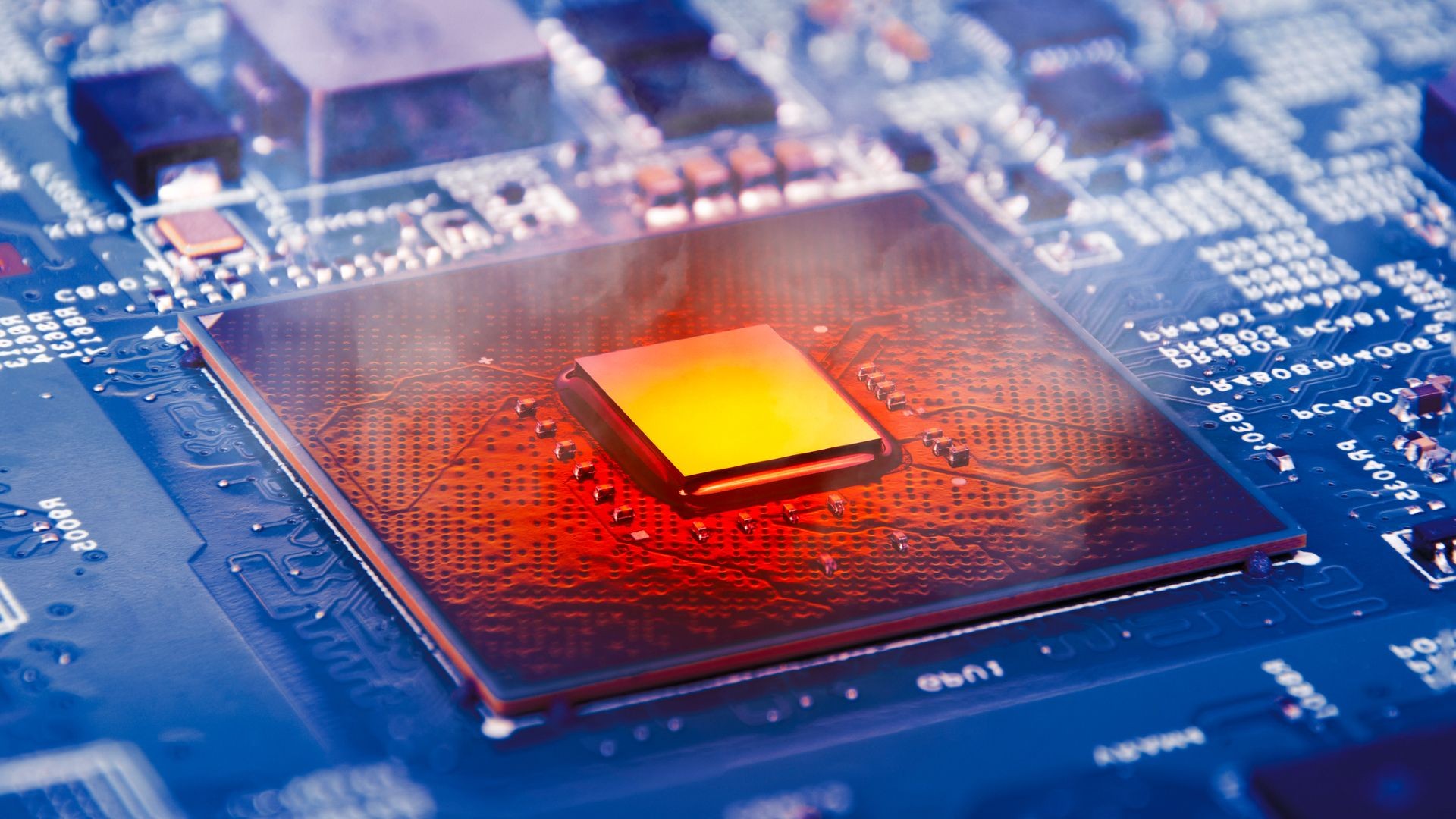
Scientists at the Massachusetts Institute of Technology (MIT) have demonstrated a groundbreaking method for processing data using waste heat generated by electronic devices. Instead of discarding heat as a byproduct, they’ve designed microscopic silicon structures that harness thermal energy to perform computations – a concept that could revolutionize energy efficiency in high-power applications like artificial intelligence.
How It Works: Analog Computing with Heat
The research, published in Physical Review Applied, details passive silicon structures that precisely control heat distribution across a chip’s surface. These structures don’t rely on conventional electronics; instead, they leverage the natural laws of heat conduction to encode thermal energy as data. This approach represents a shift towards analog computing, where continuous physical values (temperature, heat flow) replace binary 1s and 0s.
Key takeaway : The team has essentially turned heat, traditionally considered a waste product, into a usable form of information.
Eliminating Sensors and Boosting Efficiency
The MIT team’s innovation offers several potential advantages. First, it could eliminate the need for multiple temperature sensors on chips, reducing space constraints and complexity. More importantly, the technique allows for real-time heat detection and temperature measurement without increasing energy consumption.
This is particularly relevant for high-power computing tasks, where excessive heat generation is a major challenge. By embedding these structures into microelectronic systems, researchers hope to make AI workloads and other demanding processes more energy-efficient.
From Simulation to Reality: Scaling the Technology
In simulations, the structures successfully performed matrix-vector multiplication with over 99% accuracy. Matrix multiplication is fundamental to machine learning and signal processing, but scaling this approach for complex tasks like large language models (LLMs) would require millions of interconnected silicon structures.
The research builds on prior MIT work from 2022, which focused on designing nanostructured materials capable of controlling heat flow. The team is now exploring applications in thermal management, heat-source detection, and temperature-gradient monitoring to prevent chip damage without additional power requirements.
“Most of the time, when you are performing computations in an electronic device, heat is the waste product… But here, we’ve taken the opposite approach by using heat as a form of information itself,” explains Caio Silva, lead study author.
The ultimate goal is to transform a long-standing engineering problem – wasted thermal energy – into a new computational resource. This research suggests a future where devices don’t just process data, they learn from the very heat they produce.