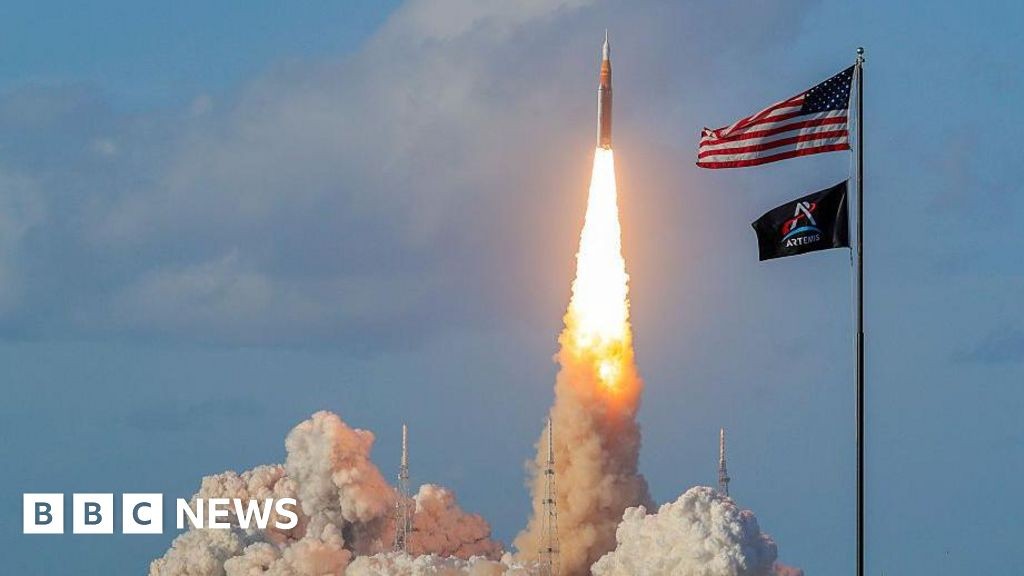
The recent launch of NASA’s Artemis II mission wasn’t without its share of nail-biting moments. Just hours before liftoff, the crew and ground control raced to resolve critical technical issues that threatened to scrub the historic flight. These included a malfunctioning toilet and problems with two key safety systems, underscoring the inherent risks of space travel.
The Down-to-Earth Plumbing Problem
Even in the high-tech world of space exploration, basic human needs pose real challenges. Sensors on the spacecraft’s waste management system registered unexpected readings, prompting astronaut Christina Koch to act as an impromptu plumber. Under guidance from mission control, she dismantled parts of the toilet to correct the issue. The solution was confirmed with a casual radio transmission: “Happy to report that toilet is go for use.”
This incident highlights the importance of reliable waste management systems in space, where gravity doesn’t assist in the process. NASA has invested over $23 million into its “Universal Waste Management System,” designed for both male and female astronauts. This system uses funnels, airflow, and sealed containers to handle waste effectively in a zero-gravity environment.
Critical Safety Systems Under Scrutiny
The Artemis II mission also faced concerns with its flight termination and launch abort systems. The flight termination system, designed to destroy the rocket if it veers off course, experienced a communications glitch that was fixed using hardware from the retired Space Shuttle program. The launch abort system, a crucial emergency escape tower, initially displayed higher-than-expected temperatures, but was deemed safe for launch.
These last-minute fixes underscore the fact that even the most advanced space programs rely on a combination of cutting-edge technology and improvised solutions. The final ten minutes before launch were tense, with each engineer confirming readiness: “Booster, go,” “GNC, go,” “Range, go.” The mission proceeded only after all systems were confirmed operational.
Intentionally Breaking the Spacecraft
Now in Earth’s orbit, the Artemis II crew is deliberately stressing their spacecraft. They are conducting rigorous tests, cycling through computer modes, switching radio stations, and simulating extreme cabin conditions to evaluate the life-support system’s resilience. This intentional effort to “break” the spacecraft is a crucial step in validating its performance before the high-stakes journey to the Moon.
The Artemis II mission represents humanity’s ongoing ambition to push the boundaries of space exploration. The challenges encountered during launch and testing serve as a reminder of the inherent risks involved, but also highlight the ingenuity and dedication of those working to overcome them.