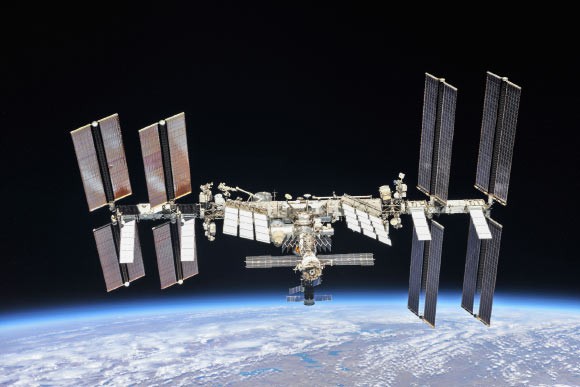
New research conducted aboard the International Space Station (ISS) reveals that the unique conditions of microgravity significantly alter the dynamics between bacteriophages – viruses that infect bacteria – and their bacterial hosts. The study, led by researchers from the University of Wisconsin-Madison and Rhodium Scientific Inc., demonstrates how the absence of weight impacts infection rates, genetic adaptation, and even the potential for improved terrestrial biotechnology.
Delayed Infection, Accelerated Evolution
Experiments involving the T7 bacteriophage and Escherichia coli bacteria showed a distinct delay in infection under microgravity conditions. While T7 phages typically infect and destroy E. coli within 30 minutes on Earth, no measurable viral growth was observed during the initial hours in space. However, after 23 days, the bacteriophages successfully propagated, reducing bacterial populations. This indicates that microgravity doesn’t prevent infection, but rather slows it down initially.
The delay is likely caused by reduced fluid convection in the absence of gravity, hindering the physical encounter between viral particles and bacterial cells. This disruption of normal mixing affects the early stages of infection, giving bacteria a temporary advantage.
Genetic Mutations Reveal Adaptive Pressure
To understand the long-term consequences, researchers sequenced the genomes of both bacteriophages and bacteria after prolonged incubation in microgravity. The results showed an abundance of new mutations in both organisms, confirming that they adapted to the space environment. Critically, the patterns of these mutations differed from those observed under Earth gravity, suggesting unique selective pressures are at play in space.
The study focused specifically on the bacteriophage’s receptor binding protein – a crucial component that determines how effectively a virus recognizes and infects its host. Deep mutational scanning revealed significant differences in this protein’s evolution between microgravity and terrestrial experiments.
Space-Driven Adaptations Enhance Terrestrial Applications
Perhaps the most surprising finding is that bacteriophage variants evolved in microgravity demonstrated increased effectiveness against drug-resistant strains of E. coli on Earth. This suggests that the selective pressures of space can generate viral adaptations with valuable terrestrial applications, potentially opening new avenues for phage therapy and biotechnology.
“Exploring phage activity in non-terrestrial environments reveals novel genetic determinants of fitness and opens new avenues for engineering phages for terrestrial use.”
The success of this research establishes a foundation for future investigations on the ISS. By studying how viruses and bacteria evolve in extreme conditions, scientists may uncover new ways to combat antibiotic resistance, develop advanced diagnostic tools, and harness the power of phages for a range of biotechnological purposes.
This study reinforces the value of space-based research not only for understanding fundamental biological processes but also for generating practical solutions to pressing terrestrial challenges.
P. Huss et al. 2026. Microgravity reshapes bacteriophage-host coevolution aboard the International Space Station. PLoS Biol 24 (1): e3003568; doi: 10.1371/journal.pbio.3003568