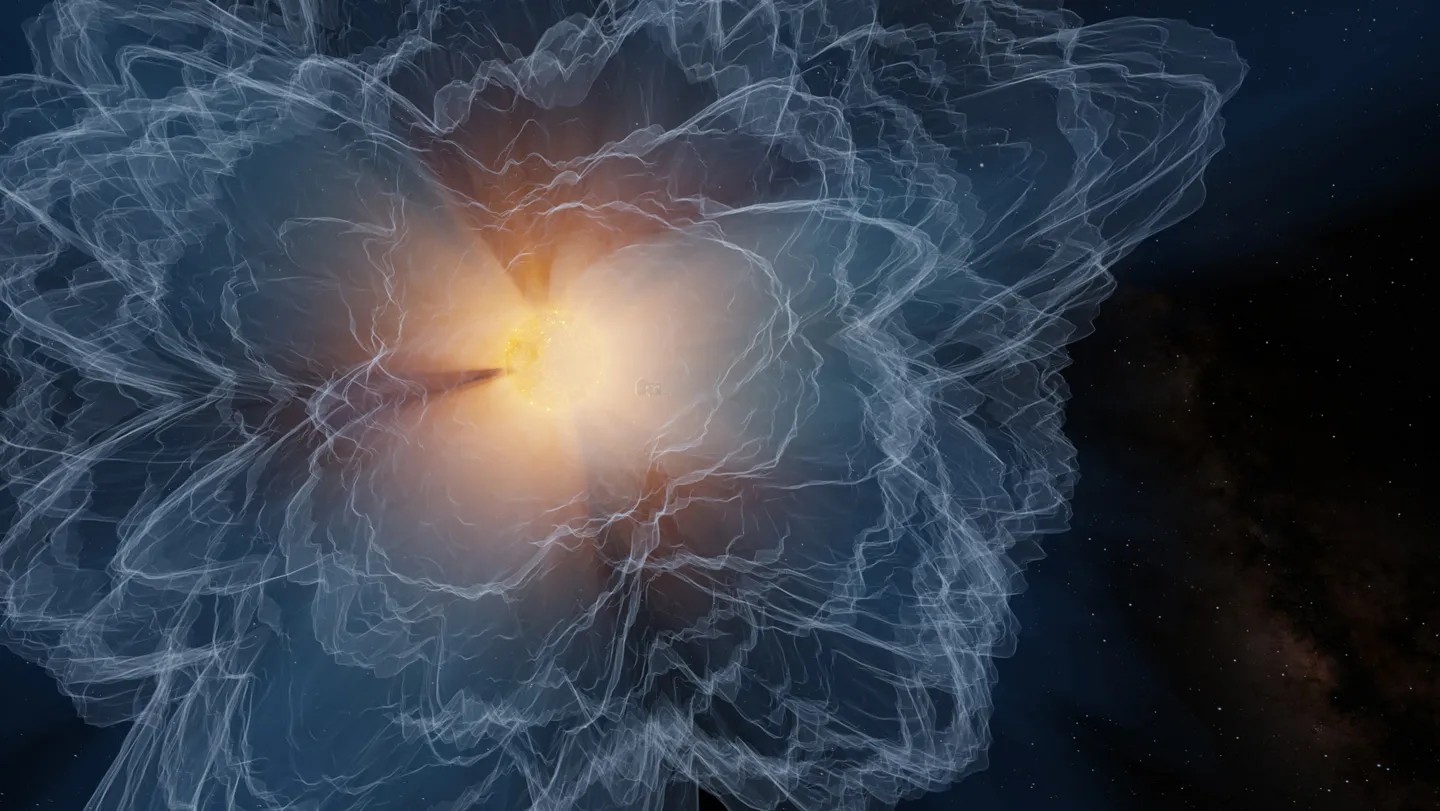
New, detailed maps of the sun’s outer atmosphere reveal a surprisingly complex and dynamic boundary, resembling a “pufferfish” in shape. These findings, published in the Astrophysical Journal Letters, could dramatically improve our ability to predict solar storms and assess the habitability of planets around other stars.
The Alfvén Surface: Where the Sun Ends and Space Begins
The boundary in question is called the Alfvén critical surface. This invisible threshold marks the point where plasma and particles escape the sun’s gravitational pull, becoming the solar wind. Crucially, this surface isn’t smooth or static; it fluctuates in size and shape as the sun goes through its roughly 11-year magnetic cycle. Previous estimates relied on observations from Earth’s distance, but NASA’s Parker Solar Probe has now flown through this boundary multiple times, providing unprecedented data.
How the Maps Were Created
Researchers combined direct measurements from the Parker Solar Probe (which has ventured as close as 6.1 million kilometers to the sun) with remote observations from other spacecraft. This allowed them to map the Alfvén surface’s density, speed, and temperature. The results show that as the sun transitions from periods of low activity (solar minimum) to high activity (solar maximum), the Alfvén surface expands and becomes more irregular. The team plans to continue observing these changes as the sun heads back toward its next minimum over the next five years.
Why This Matters: Solar Storms and Beyond
Understanding the Alfvén surface is vital for several reasons:
- Predicting Space Weather: Solar storms—caused by disruptions in the sun’s magnetic field—can damage satellites, disrupt power grids, and even pose risks to astronauts. Accurate maps of the Alfvén surface will help forecast these events.
- Human and Animal Health: Increased solar activity can have subtle but measurable effects on health, and understanding these mechanisms can help mitigate risks.
- Aurora Forecasting: The beautiful auroras (Northern and Southern Lights) are a visible effect of solar activity. Better predictions mean more reliable aurora viewing.
Implications for Exoplanets
The research extends beyond our own solar system. Some exoplanets orbit very close to their stars—stars that may be far more magnetically active than the sun. If a planet spends its entire life within an active star’s Alfvén surface, it would be constantly bombarded with high-energy particles, making habitability unlikely.
“That probably won’t be good news for habitability,” says heliophysicist Sam Badman.
These new maps provide a crucial step toward understanding the complex interactions between stars and their surrounding space, with implications ranging from protecting Earth’s technology to assessing the potential for life elsewhere in the universe.