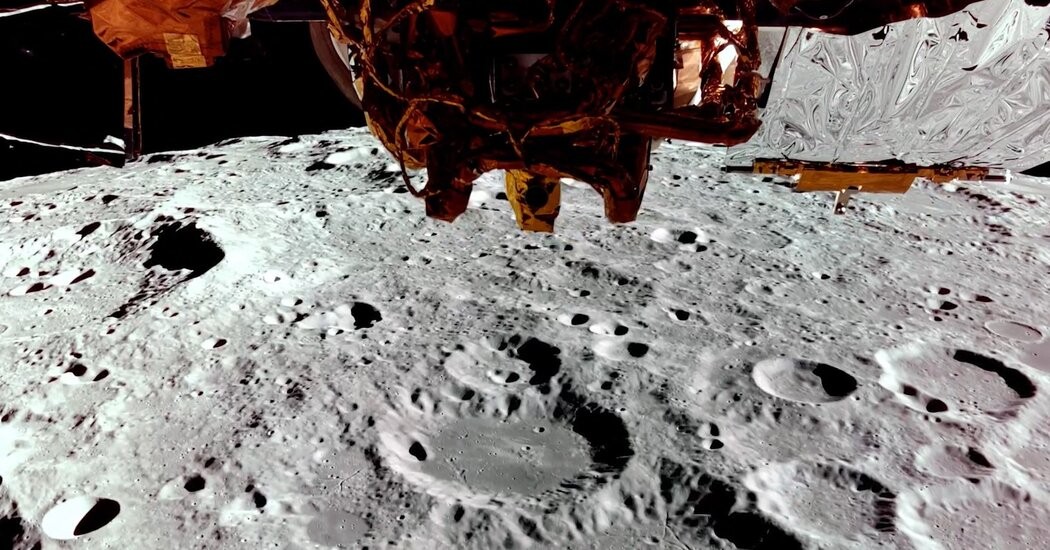
A robotic lander called Blue Ghost, built by Firefly Aerospace, successfully touched down on the Moon in 2025—but not before a close call with another spacecraft. The incident highlights a little-known but vital function: NASA’s low-key space traffic control system.
The Incident
Just one day before landing, the Blue Ghost mission faced a sudden risk of collision with another orbiting vehicle. This was unexpected, as only 11 spacecraft (from the U.S., China, India, and Korea) currently circle the Moon. The chance of two craft occupying the same space at the same time seemed remote, but NASA’s Jet Propulsion Laboratory (JPL) team stepped in to avert disaster.
Why This Matters
The near-miss demonstrates that even with limited lunar traffic, coordination is critical. As space activity increases, the risk of collisions grows exponentially. This isn’t just about preventing damage to hardware; it’s about ensuring the long-term viability of lunar exploration. Without effective tracking and collision avoidance, future missions could be jeopardized, and debris fields could render certain orbits unusable.
NASA’s Unsung Role
For the past 15 years, JPL has quietly monitored spacecraft around the Moon and Mars, issuing alerts when potential conflicts arise. This function is crucial as more nations and private companies enter the space race. While the Blue Ghost incident was resolved, it serves as a stark reminder that space isn’t empty; it’s becoming increasingly crowded.
Without effective traffic management, lunar and Martian exploration could become too dangerous to continue.
The incident underscores the need for international collaboration on space traffic rules. As the Moon and Mars become more accessible, standardized protocols will be essential to prevent accidents and ensure that space remains open for future missions.