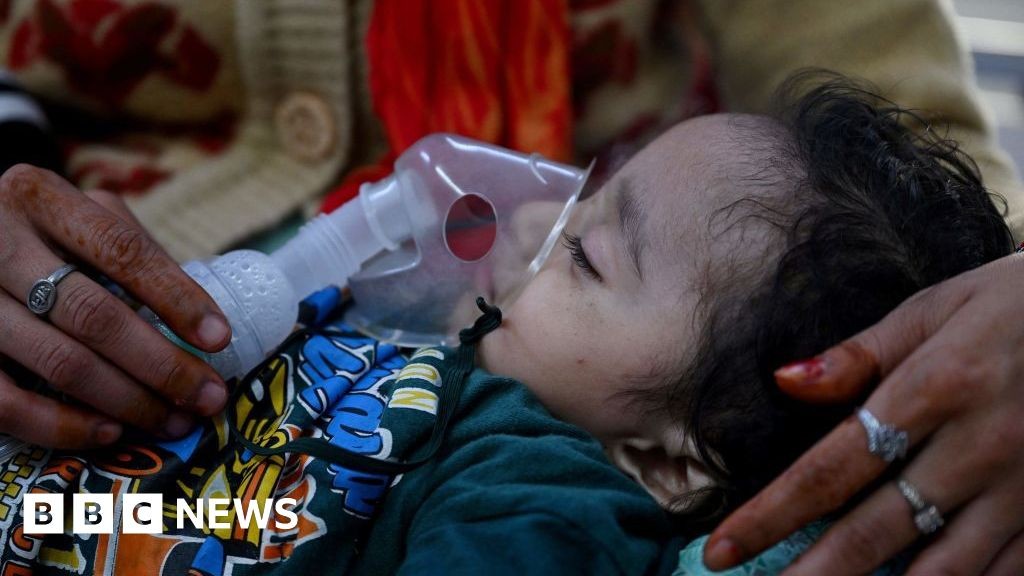
Delhi’s public hospitals have seen a dramatic increase in patients suffering from acute respiratory illnesses over the past three years, with over 200,000 cases recorded between 2022 and 2024. The spike coincides with consistently hazardous air quality levels in the Indian capital and its surrounding regions.
Rising Hospitalizations
According to the federal government’s recent report to Parliament, over 30,000 individuals required hospitalization due to respiratory problems during this period. The six major state-run hospitals in Delhi documented 67,054 cases in 2022, followed by 69,293 in 2023, and 68,411 in 2024. While the data suggests a correlation between rising pollution and increased hospital visits, the government has cautioned that it cannot definitively prove a causal link.
The Toxic Air Crisis
Delhi’s air quality consistently exceeds safe levels, particularly during the winter months. The Air Quality Index (AQI) frequently registers more than 20 times the World Health Organization’s recommended limits, due to high concentrations of PM2.5 – microscopic pollutants capable of penetrating deep into the lungs.
The problem isn’t caused by a single source. Instead, it’s a dangerous mix of factors including:
– Industrial emissions
– Vehicle exhaust
– Seasonal crop burning in neighboring states
– Low wind speeds
– Dropping temperatures
Public Health Implications
Prolonged exposure to such high pollution levels poses severe health risks, not only for individuals with pre-existing conditions but also for healthy people. Delhi’s AQI has repeatedly crossed the “severe” mark of 400 over the last decade. Recent reports from BBC News India indicate hospitals are overwhelmed with sick children suffering from the effects of the toxic air.
Legal and Political Pressure
The escalating crisis is now drawing legal scrutiny. The Delhi High Court is scheduled to hear a petition demanding urgent action to curb hazardous pollution. India’s Supreme Court has also repeatedly expressed concerns about the deteriorating air quality in the region.
The continued rise in respiratory illnesses in Delhi underscores the urgent need for systemic change. Without meaningful intervention, the health of millions will remain at risk.
The situation calls for immediate policy changes and enforcement to address the root causes of Delhi’s pollution.