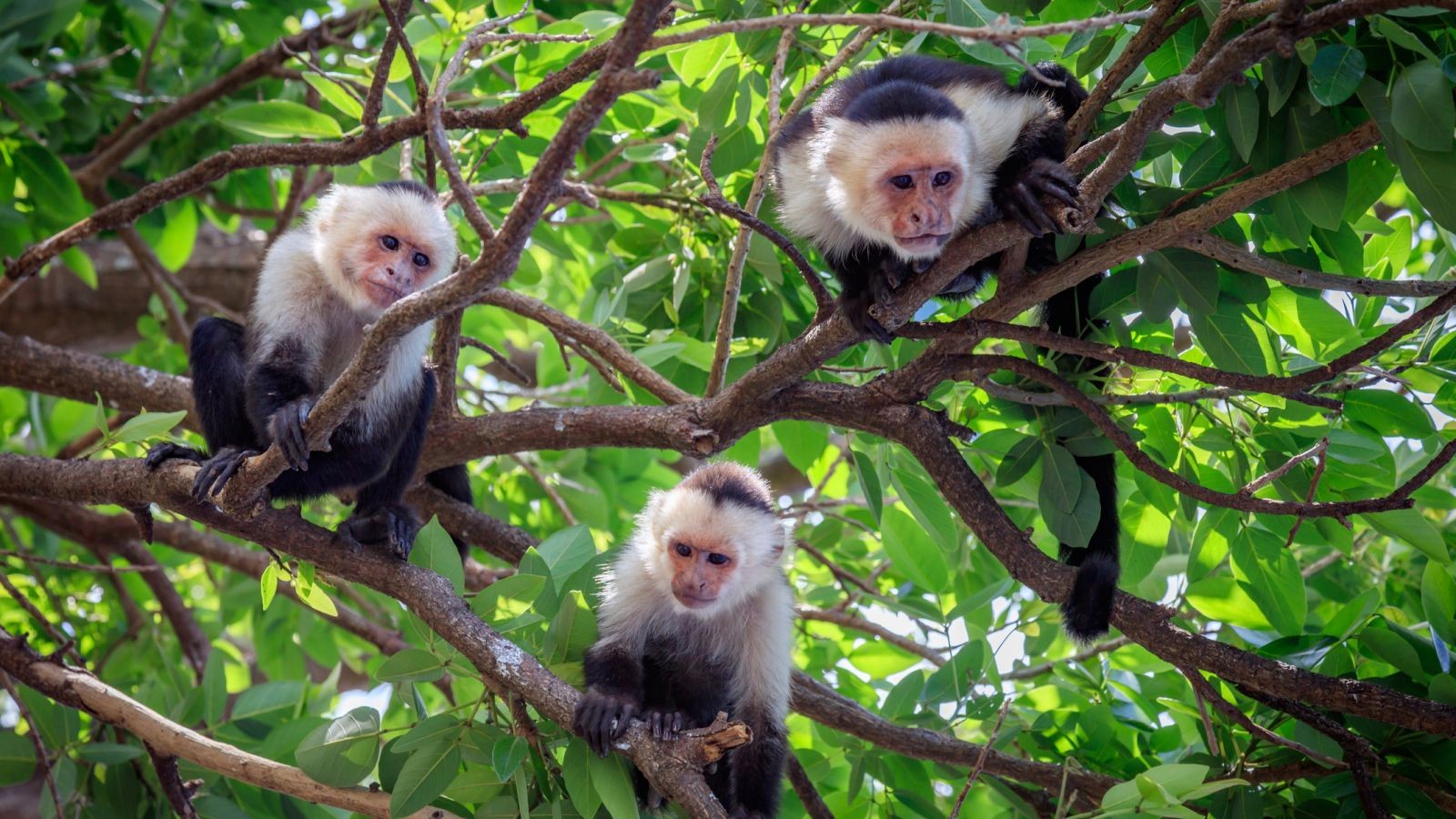
White-faced capuchin monkeys usually handle the forest’s shifts just fine. Plants, bugs, they are adapted to change. But then comes a year like 2015. The El Niño Southern Oscillation hammered Costa Rica. An abnormally severe drought struck.
Sarah Perry, an evolutionary anthropologist from UCLA, was there. She watched something happen that felt impossible for a primate known for fierce maternal bonds. Under normal conditions the mothers are devoted.
Not then.
“Now I was seeing babies crying on the Ground piteously. And the Mothers just looking down like ‘Too Much trouble’ and Walking off abandoning Their Infants.”
She saw infants abandoned. Crying. Left behind.
Even capuchins have limits. And with climate models predicting more extremes this might become the new normal. We need to pay attention.
Mapping the Madness
Odd Jacobson was at the Lomas Barbudal research station in 2016. Right after the drought. He was studying how twelve distinct groups of capuchins moved through the woods. Now he wants to know how climate shocks wreck their social fabric.
His team, including Perry, published their findings in Nature Ecology and Evolution. They had thirty-three years of GPS data. That is a long time to watch monkeys roam.
First they looked inside the groups. Size matters. More monkeys means you can hold onto prime fruit spots called food patches. It also means less food per head. You are fighting your own kin for a meal. Daily fruit intake drops as the crowd grows.
They tracked daily calories. Home range size. How far they trudged to eat.
Then came the math. A hierarchical social relations model helped them predict how two separate groups would move and where they’d collide. They ran this pair by pair until all twelve groups were mapped. Finally they overlaid climate data. How would droughts or floods change these territories and encounters?
Encounters aren’t always friendly. Sometimes they get violent.
No Hoarding
Big groups usually bully little groups. In a standard dry season large capuchin squads muscle their way into riverine areas with better fruit. Small groups scatter. Strength in numbers pays off.
Until it doesn’t.
During the 2015 super-drought driven by El Niño this rule broke down. The big groups didn’t hoard the good land. They just couldn’t. Or wouldn’t.
Jacobson isn’t entirely sure why. Maybe the landscape became so uniformly poor that there was nothing left worth monopolizing. No high quality patch existed to fight over.
“Maybe There’s Not as Much heterogeneity in The landscape during these resource poor Times.”
The balance of group size shifts when the weather goes rogue. And with global heating El Niño events aren’t getting milder. They are intensifying. We need to know what this does to animal societies because we might learn something about our own resilience.
The End of the Line
Filippo Aureli wasn’t on the study but he’s seen similar patterns. He tracks spider monkeys in Mexico and noted infant death rates during that 2015 Costa Rican drought. The capuchins saw high infant mortality. Their kids died or were left behind.
Spider monkeys took a different path. They simply stopped breeding.
With climate change bringing more frequent and extreme weather we are entering unknown territory.
“For This period They’ve Held On Very Well the spider monkeys but We Don’t Know for how much Longer.”
Aureli sees the writing on the wall. Perry agrees but worries about our methods. She emphasizes the need for baseline data before the chaos hits. You need to know what “normal” looks like.
If we drop in now in the middle of planetary fever dreams can we really study it?
Or are we just watching the end unfold?