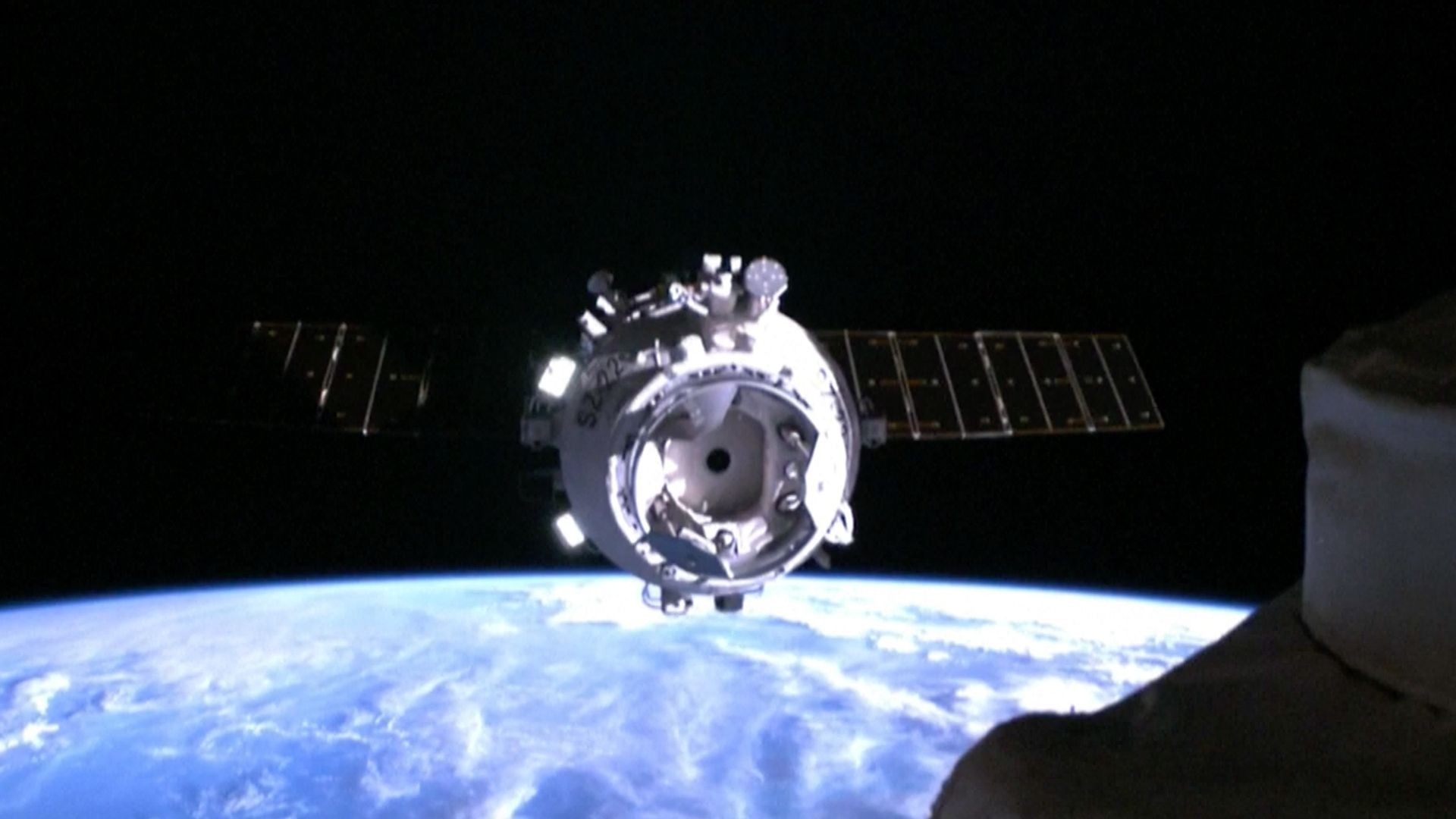
China successfully deployed an uncrewed Shenzhou 22 spacecraft to its Tiangong space station on November 25th, providing a critical backup return vehicle for astronauts stranded after damage to their original capsule. The mission underscores China’s rapid response capabilities in space emergencies and its commitment to crew safety.
The Incident and Response
The crisis began when a crack was discovered in the window of the Shenzhou 20 return capsule following a probable strike from space debris. This damage rendered the capsule unsafe for atmospheric reentry, forcing the Shenzhou 20 crew to return using the Shenzhou 21 spacecraft instead. This left the Shenzhou 21 astronauts without a guaranteed way home should an emergency arise.
China activated a contingency plan, maintaining a backup Long March 2F/G rocket and Shenzhou capsule on standby at the Jiuquan Satellite Launch Center. Within 20 days, the Shenzhou 22 mission launched, demonstrating the nation’s ability to quickly address in-orbit complications.
Implications for Future Missions
The Shenzhou 22 mission serves as a proof of concept for fast-track emergency response in space. The China Manned Space Agency (CMSA) highlighted the event as an example of prioritizing crew safety, and verifying the effectiveness of its “one-for-one, rolling backup” strategy.
The damaged Shenzhou 20 capsule remains docked at Tiangong for ongoing experiments, but must be removed before the next crewed mission, Shenzhou 23, arrives in April 2026. The incident highlights the growing risks of orbital debris to operational spacecraft, and the need for redundancy in long-duration space missions.
This rapid response and demonstrated capability will likely influence how other space agencies approach emergency preparedness for future missions, especially as space activity increases.