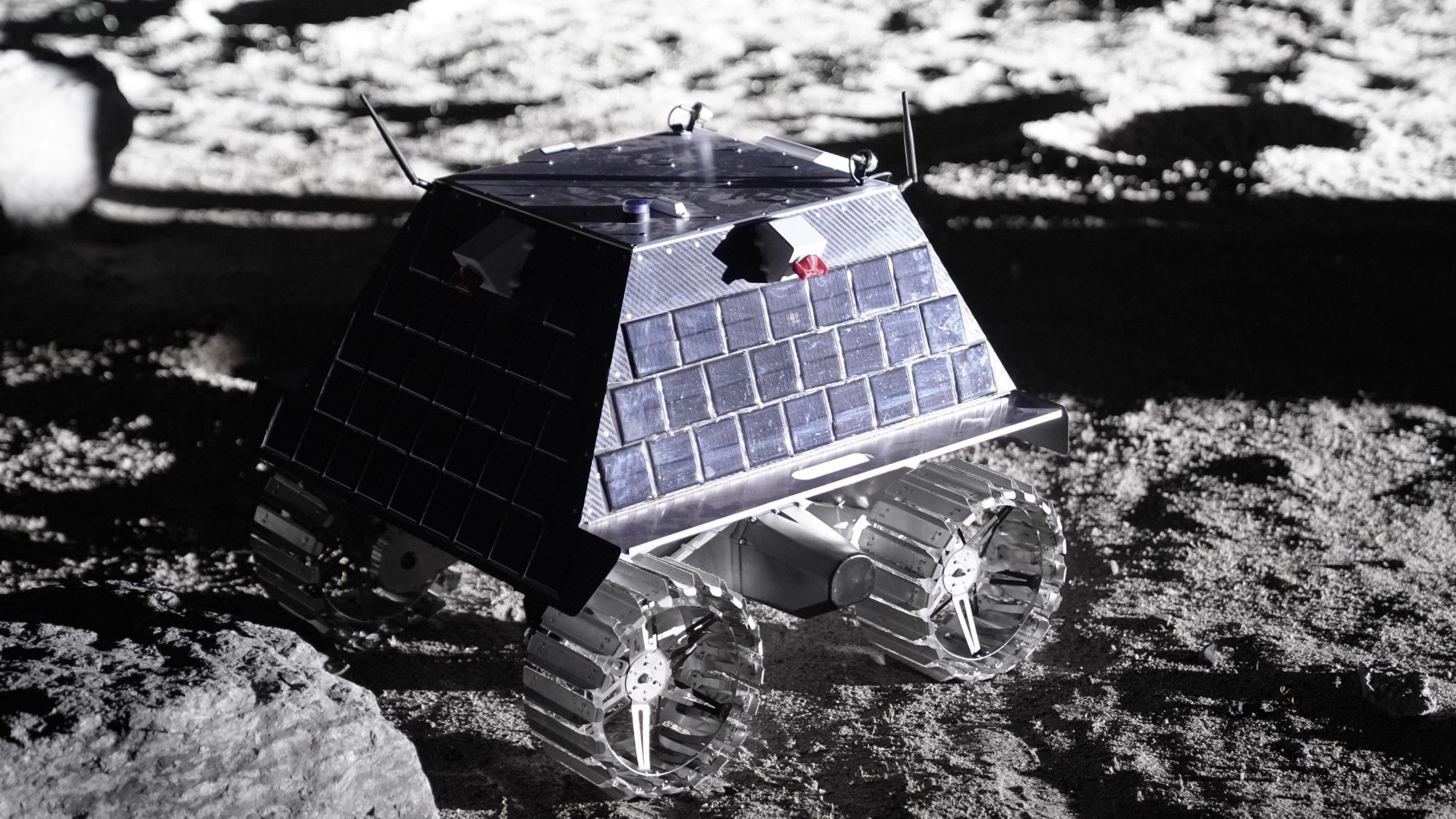
Canada has canceled its inaugural rover mission to the lunar south pole, redirecting funds towards other space-related projects. The decision, announced in the Canadian Space Agency’s (CSA) spending plan for 2026-27, follows recent adjustments to NASA’s Artemis program, including a pause on the long-planned lunar space station, Gateway, to prioritize surface infrastructure.
Rover Project Background
The rover, initially unveiled in 2021, was designed to search for water ice and analyze the moon’s geology. The project represented over two decades of groundwork, building on millions in stimulus funding from the 2008 recession to develop Canadian space-rover expertise. The rover was slated for launch aboard Firefly Aerospace’s 2029 mission under NASA’s Commercial Lunar Payload Services (CLPS) program, carrying six instruments—five Canadian payloads and a NASA radiometer.
Cancellation Rationale and Economic Focus
The CSA cited a shift in Canadian government priorities, emphasizing restraint in operational spending to stimulate economic growth. This move aligns with a broader commitment to domestic space infrastructure, demonstrated by the recent $200 million CDN investment in a sovereign launch pad in Nova Scotia. The rover cancellation itself accounts for $6.7 million CDN in budget cuts, with an additional $26 million CDN projected savings through staffing reductions by 2029.
Impact on Research and Future Prospects
While the rover project is terminated, the CSA has assured continued funding for the 50-person science team “for the length of their grants.” However, details remain uncertain. The knowledge gained will be repurposed for future missions, including a planned Canadian lunar utility rover—a cargo vehicle for astronaut missions expected no earlier than 2033. Companies like Canadensys Aerospace, MDA Space, and Mission Control are already conducting preparatory studies for this project.
Broader Context: Artemis and Canadian Participation
The cancellation occurs just before the launch of Artemis 2, featuring Canadian astronaut Jeremy Hansen as the first non-American on a crewed lunar mission since 1972. Western University, the science lead for the rover, also played a role in Hansen’s training, underscoring the interconnected nature of Canadian space endeavors. NASA’s decision to prioritize lunar base infrastructure over Gateway—a station maintained by Canada’s Canadarm3—further underscores the changing dynamics of international lunar exploration.
The CSA’s decision reflects a pragmatic reevaluation of priorities, balancing long-term scientific goals with immediate economic and strategic objectives. The cancellation does not eliminate Canada’s presence in lunar missions but shifts its focus toward supporting human exploration and developing critical infrastructure, ensuring continued participation in the evolving Artemis program.