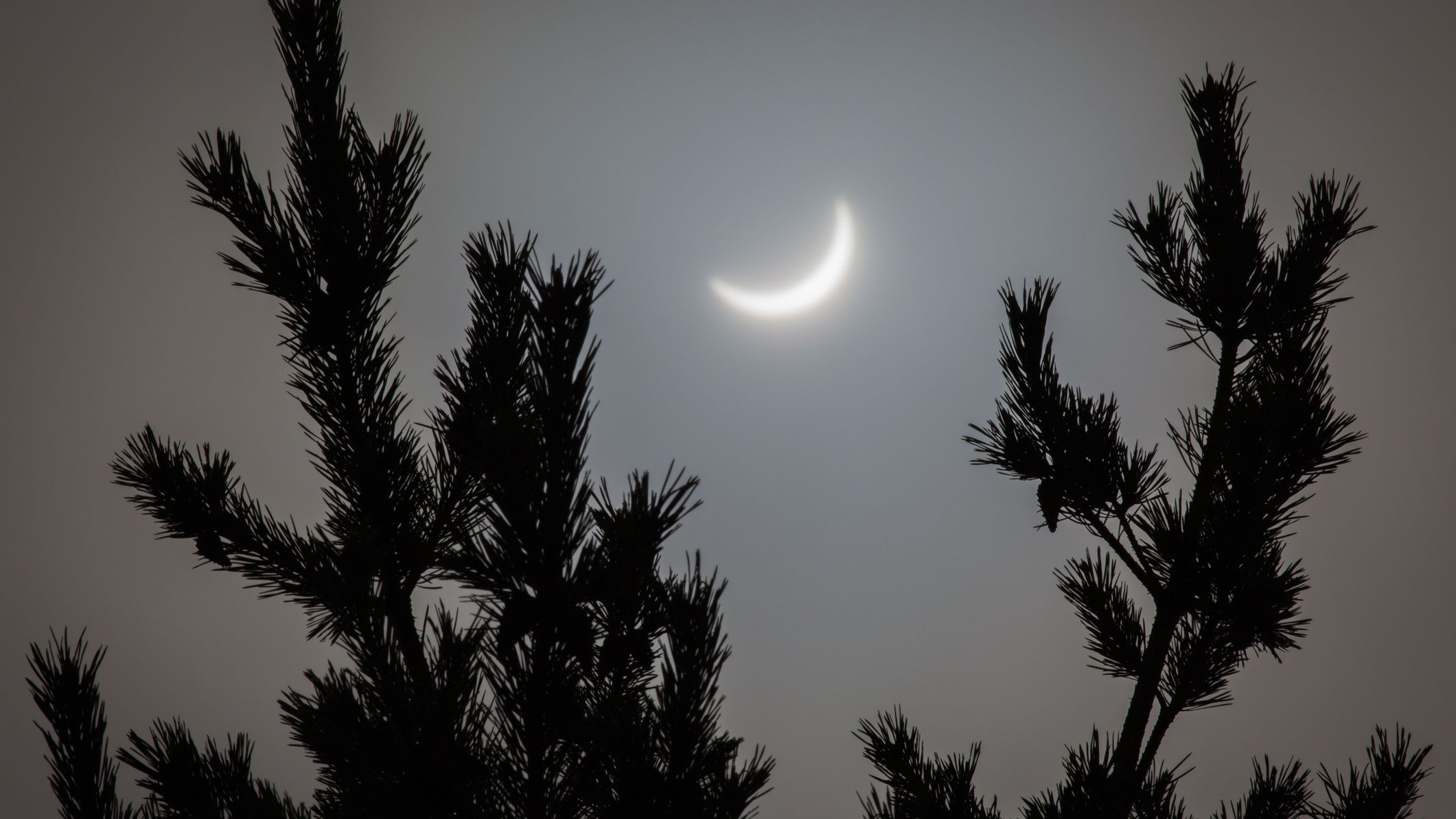
In 2022, a research team investigating spruce trees in the Italian Dolomites reported unusual electrical activity in the trees before a solar eclipse. The team concluded that the trees may have “anticipated” the eclipse, with older trees possibly communicating this event to younger ones via electrical signals. However, a new critique published in February 2024 casts doubt on these findings, suggesting alternative explanations for the observed phenomena.
The Original Experiment
Researchers led by Alessandro Chiolerio built custom sensors to measure the electrical activity within the spruce trees, referred to as their “electrome”. They found that roughly 14 hours before the eclipse, the trees exhibited a synchronized electrical response. Chiolerio’s team attributed this behavior to the trees reacting to the upcoming eclipse.
The team also documented environmental factors like temperature and humidity, but acknowledged that they could not measure everything, including cosmic rays and electromagnetic interference. This omission is crucial because it leaves room for other interpretations of the data.
The Counterargument: Lightning as a More Likely Cause
Ariel Novoplansky, a researcher at Ben-Gurion University, published an opinion piece challenging Chiolerio’s conclusions. Novoplansky argues that the observed electrical activity was likely caused by a thunderstorm and lightning strikes occurring in the area at the same time.
Older trees, which act as “bigger antennas” due to their size, might have shown greater activity simply because they are more susceptible to electrical disturbances. Novoplansky also points out that the partial eclipse reduced sunlight by only 10.5% for a short period, a change too minor for trees to discern as significant.
The Core of the Disagreement
The debate centers on whether the observed synchronicity in electrical signals is proof of anticipation or simply a correlation with an external event like lightning. Chiolerio maintains his research was transparent, providing schematics for replication, while Novoplansky questions the validity of attributing complex behavior to a relatively minor environmental change.
Gagliano, a co-author on the original study, concedes that the research has limitations but stresses that the observed pattern remains unexplained. She advocates for further testing to isolate the true cause.
Moving Forward: Replication and Future Research
The scientific community remains divided. While Chiolerio proposes repeating the experiment during a total eclipse in Spain this year, Novoplansky emphasizes the need for rigorous control experiments to rule out confounding factors. The key takeaway is that while the original study presented an intriguing observation, further research is needed to determine whether spruce trees truly “anticipate” eclipses or if the phenomenon is due to other environmental cues.