David George Haskell’s How Flowers Made Our World isn’t just a botanical study; it’s a fundamental re-evaluation of how we perceive the natural world. Haskell argues that flowers aren’t merely ornamental, but rather the driving force behind the ecosystems—including our own—that sustain life on Earth. This isn’t about sentimentality; it’s about recognizing the unseen power that underpins existence.
The Unexpected Dominance of Flowering Plants
For too long, Western culture has relegated flowers to the realm of decoration, associating them with femininity and weakness. Haskell points out the irony: many men avoid flower-garnished drinks while happily consuming beer, a beverage made from flowering plants. This disconnect highlights a deeper misunderstanding. Flowers didn’t just appear in the fossil record; they transformed it.
When flowering plants (angiosperms) evolved during the late dinosaur era, they didn’t just add color and fragrance; they fundamentally reshaped ecosystems. Forests, grasslands, and even our own survival depend on these often-overlooked organisms. The Earth, as Haskell puts it, is a floral planet. This isn’t mere poetic license; it’s a biological reality.
Evolutionary Innovation Through Duplication
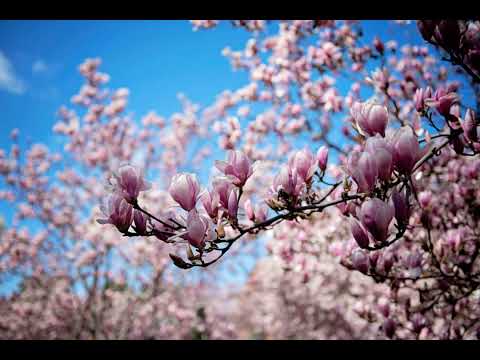
Haskell dissects the mechanisms behind this dominance. Flowering plants rapidly diversified through repeated genome duplication, creating a vast pool of genetic material for experimentation. This allowed them to evolve traits faster than any other plant group, pushing older lineages to the margins. Magnolia trees, barely changed in 100 million years, offer a glimpse into these early, world-altering plants.
Beyond Biology: Flowers and Humanity
The book doesn’t stop at the natural world. Haskell explores how flowers have shaped human culture, from the perfume industry to modern agriculture. Linnaeus’s classification system was built on floral structures, and the very crops that feed billions – wheat, maize, rice – are all flowering plants. Without them, our civilization would collapse.
Haskell also acknowledges the sensory impact: flowers aren’t just visually appealing; they produce a staggering array of aromas that influence human relationships, even if subconsciously. The pre-angiosperm world, while not devoid of life, lacked the sensory richness we take for granted today.
A Lyrical, Exploratory Approach
Haskell’s writing style isn’t driven by a rigid narrative but rather by exploration. He presents a series of interconnected essays, each focusing on a different flower to illustrate his point. This approach may not appeal to readers seeking a linear argument; instead, it invites immersion in his lyrical prose. The influence of Proust is evident, with Haskell aiming to evoke evolutionary history from the petals of a magnolia.
The Urgent Need for Conservation
Despite minor stylistic preferences, Haskell’s central message is undeniable: we must recognize and conserve the diversity of flowering plants. Wildflower-friendly gardens and rewilding projects aren’t just aesthetic choices; they are ecological imperatives.
How Flowers Made Our World is a deeply researched, insightful, and often vivid exploration of a fundamental truth. It’s a reminder that the most powerful forces in nature often come in the most delicate forms. This book isn’t just about flowers; it’s about understanding our place in a world shaped by their silent, revolutionary power.