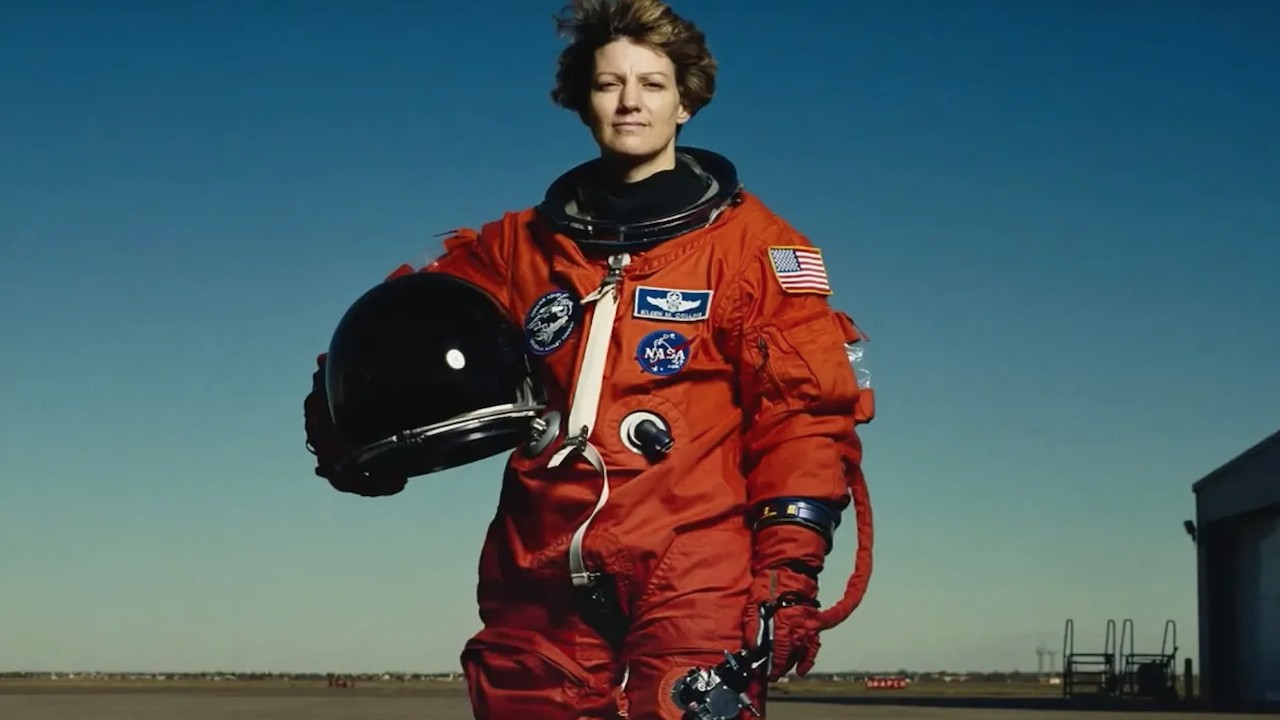
The upcoming Artemis 2 moon mission, coupled with Women’s History Month, provides a fitting backdrop for the release of “Spacewoman,” a new documentary celebrating the trailblazing career of astronaut Col. Eileen M. Collins. The film, directed by Hannah Berryman and based on Collins’ 2021 memoir Through the Glass Ceiling to the Stars, chronicles her journey from humble beginnings to becoming the first woman to pilot and command a space shuttle.
Breaking Barriers in Spaceflight
Collins retired from NASA in 2006 after logging over 6,751 flight hours in 30 different aircraft and 872 hours in space. Her story isn’t merely about achieving milestones; it’s about overcoming systemic obstacles. Berryman highlights that Collins’ ascent wasn’t preordained, making her narrative more compelling.
“If it had felt like a straightforward path, it would have been less interesting as a story. Because Eileen didn’t have the easiest of backgrounds, that was what drew me in.”
The documentary focuses on the human element of her achievements, particularly Collins’ role in the first mission following the Columbia disaster, adding dramatic weight to her already extraordinary career.
A Reluctant Icon
Despite her achievements, Collins describes herself as naturally shy and uninterested in self-promotion. She simply wanted to fly, explore, and do her job well. The documentary arose from an unexpected opportunity during the 2020 pandemic, when she finally agreed to co-author her memoir.
“I had no intention of writing a book. Then the pandemic hit, and I had nothing to do but sit around and Skype. I finally called my co-author and said, ‘Okay, let’s do this.’”
Even after publishing her memoir, Collins initially resisted the idea of a documentary, concerned about exposing her personal life. However, she eventually agreed, recognizing the potential impact of sharing her story.
From Pilot to Commander
Collins first made history in 1995 as the pilot of STS-63 aboard Discovery. She later piloted Atlantis on STS-84 in 1997, docking with the Russian Space Station MIR. In 1999, she became the first woman commander of a U.S. spacecraft with STS-93, deploying the Chandra X-Ray Observatory. Her final flight in 2005, STS-114, was a critical “Return to Flight” mission after the Columbia disaster.
Collins emphasizes the importance of maintaining focus under pressure, especially during her night landings. She credits her extensive flight experience, starting at age 20, for her success.
The Human Side of Space Exploration
Berryman stresses the need to present Collins not as a flawless icon but as a complex individual with strengths and weaknesses. The film balances mission highlights with personal stories, emphasizing the sacrifices and challenges she faced as a wife and mother while breaking barriers in space.
“It was really important to keep that human fallibility… if you’ve had challenges in life like the rest of us, that makes it even more moving and impressive.”
The documentary uses archival footage, old VHS tapes, and interviews with Collins and her family to create a raw and intimate portrait. A recent screening at March Air Force Base received a standing ovation, with many audience members praising Collins’ daughter, Bridget, for her contributions to the film.
Collins reflects on her career, joking that being a parent was the best preparation for commanding a space shuttle. The film serves as a reminder that even the most extraordinary achievements are rooted in ordinary human experiences.
“Spacewoman” is a powerful tribute to a pioneer who not only shattered glass ceilings but also redefined what it means to reach for the stars.