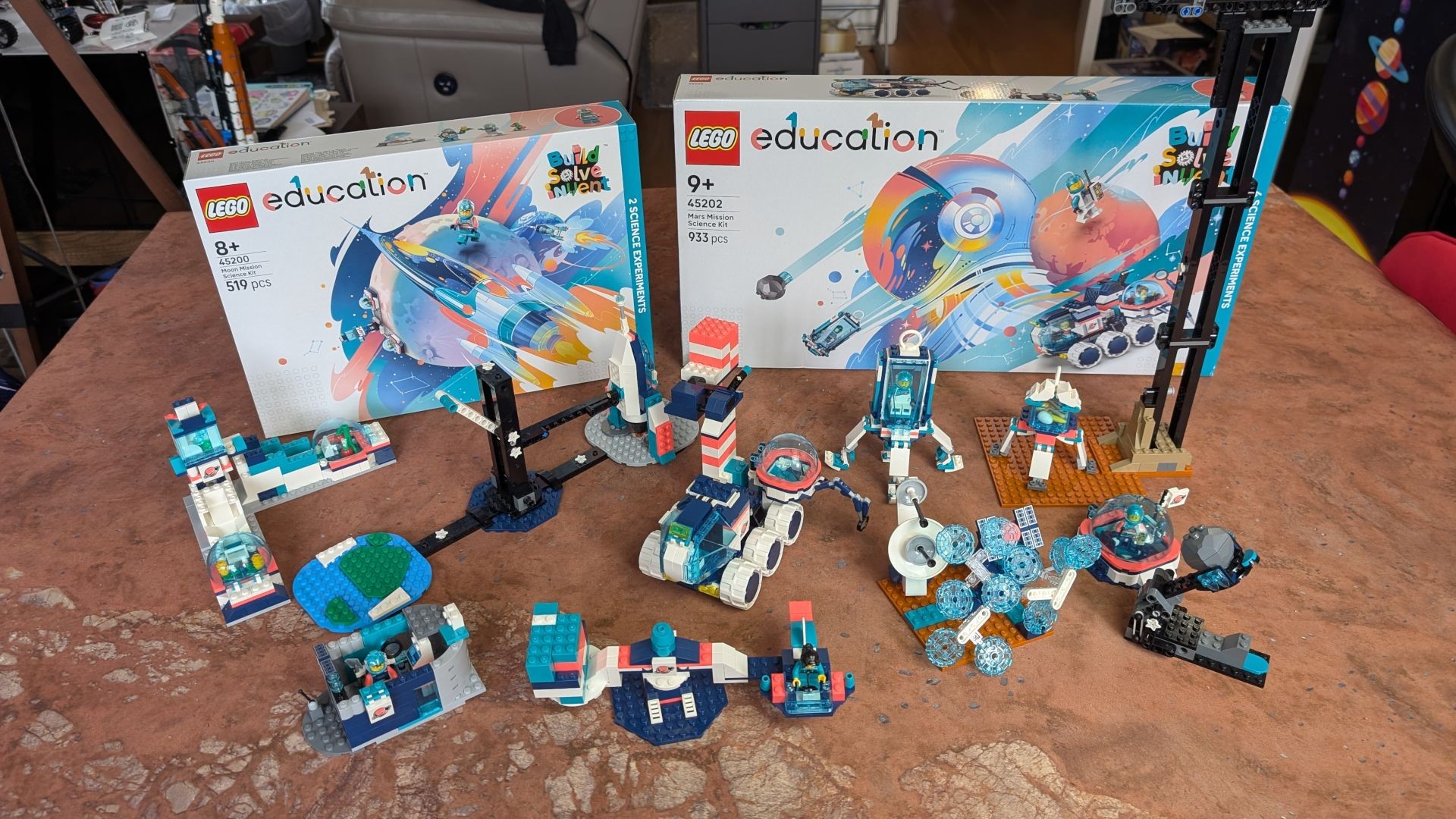
While Lego has recently mastered the art of targeting adult collectors through nostalgia and complex space themes, the company is doubling down on its core mission: education through play. A new suite of four “Science Kits”—including the Mars Mission and Moon Mission sets—aims to bridge the gap between simple construction and fundamental scientific principles.
A New Approach to Building
Unlike standard Lego sets that focus solely on following a manual to achieve a perfect replica, these educational kits utilize a unique three-stage pedagogical structure:
- Build: A traditional, step-by-step guide to assembling a specific vehicle or structure.
- Solve: A transition from instruction to problem-solving. Users are presented with a mechanical challenge (such as an unbalanced centrifuge) and given a selection of parts to “fix” the issue without a direct manual.
- Invent: The final stage encourages open-ended creativity, asking users to build original structures—like a radar station or a spaceship—using the concepts they just learned.
This “Build-Solve-Invent” loop is designed to move a child from a passive follower of instructions to an active, creative engineer.
Mars vs. Moon: Comparing the Kits
The kits vary significantly in their level of engagement and “wow factor.”
The Mars Mission Science Kit
This set appears to be the standout for younger users due to its highly interactive and tactile elements. It features:
* A Centrifuge: Simulates high-gravity rocket launch conditions.
* Supply Cranes and Rovers: Includes mechanisms for dropping supplies and clearing debris.
* Asteroid Defense: A mission-based setup where kids build energy shields to protect a base.
The Mars set excels because it leans into “dynamic play”—the kind of crash-and-bang, kinetic movement that keeps children engaged.
The Moon Mission Science Kit
The Moon set is more subdued and focused on mechanical movement. It includes:
* A Rocket Launch Pad: Uses a pivoting lever mechanism to simulate Earth-to-moon liftoff.
* A Moon Base: Features a slide system for transferring materials between zones.
While mechanically interesting, this set offers less variety than the Mars kit, which may lead to shorter play sessions for older children.
Target Audience and Learning Curve
Lego recommends these sets for children aged 9 and up. While younger children (ages 7–8) can certainly enjoy the tactile play, they may find the “Solve” and “Invent” stages frustrating without adult assistance. However, the kits possess a certain “slapstick” appeal that makes them visually engaging even for much younger toddlers who simply want to watch the moving parts.
Why This Matters
In an era of highly digital entertainment, Lego is reinforcing the value of tactile STEM learning. By intentionally leaving “gaps” in the instructions during the Solve and Invent stages, Lego is teaching children that engineering is not about perfection, but about iteration—testing a design, finding a flaw, and fixing it.
These kits move beyond mere construction; they teach the scientific method by turning mechanical failures into opportunities for discovery.
Conclusion
Lego’s new science kits successfully blend high-energy play with genuine problem-solving, offering a structured way for children to explore physics through trial and error.