A team of undergraduate students at the University of Chicago has identified a celestial rarity: SDSS J0715-7334, a star with the lowest metal content ever recorded in the universe. This discovery offers a rare window into the chemical composition of the early cosmos.
The Search for “Pristine” Matter
In astronomy, the term “metal” refers to any element heavier than hydrogen and helium. Shortly after the Big Bang, the universe consisted almost entirely of these two light gases. It was only through the life and death of the very first generation of stars—which fused light elements into heavier ones and scattered them via supernovae—that the universe became enriched with the complex elements we see today.
Because most stars are born from “recycled” material containing these heavier elements, finding a star with almost no metals is incredibly difficult. Such stars are considered pristine because they are composed of material that has remained largely untouched by the chemical enrichment of subsequent stellar generations.
A New Record in Metallicity
The discovery of SDSS J0715-7334 shatters previous records. The star contains only 0.005% of the metal content found in our Sun. To put this in perspective:
– It is more than twice as metal-poor as the previous record holder.
– Its chemical makeup is nearly identical to the primordial gas that existed in the early universe.
Located approximately 80,000 light-years from Earth, the star was identified through data from the Sloan Digital Sky Survey (SDSS).
An Ancient Cosmic Immigrant
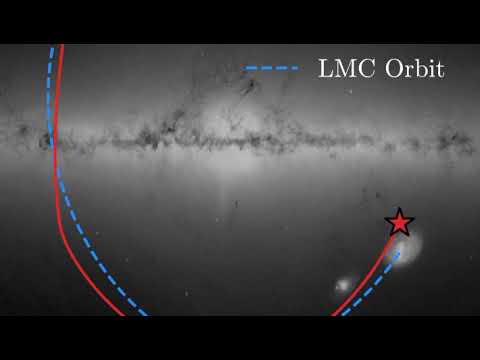
By analyzing the star’s orbit, researchers determined that SDSS J0715-7334 is not a native of our galaxy. Instead, it formed in the Large Magellanic Cloud —a satellite galaxy of the Milky Way—and migrated into our galaxy billions of years ago.
“This ancient immigrant gives us an unprecedented look at conditions in the early Universe,” noted Professor Alex Ji of the University of Chicago.
The Power of Big Data in Science
The discovery highlights a growing trend in modern astronomy: the ability for researchers to make massive breakthroughs using large-scale digital datasets. By applying advanced analysis to the vast archives of the SDSS, undergraduate students like Ha Do were able to sift through massive amounts of data to pinpoint this specific, anomalous star.
The team’s findings, which detail the low abundance of various heavy elements, have been published in the journal Nature Astronomy.
Conclusion
The discovery of SDSS J0715-7334 provides astronomers with a unique chemical “time capsule,” allowing them to study the elemental building blocks of the early universe through a star that has remained remarkably pure for billions of years.