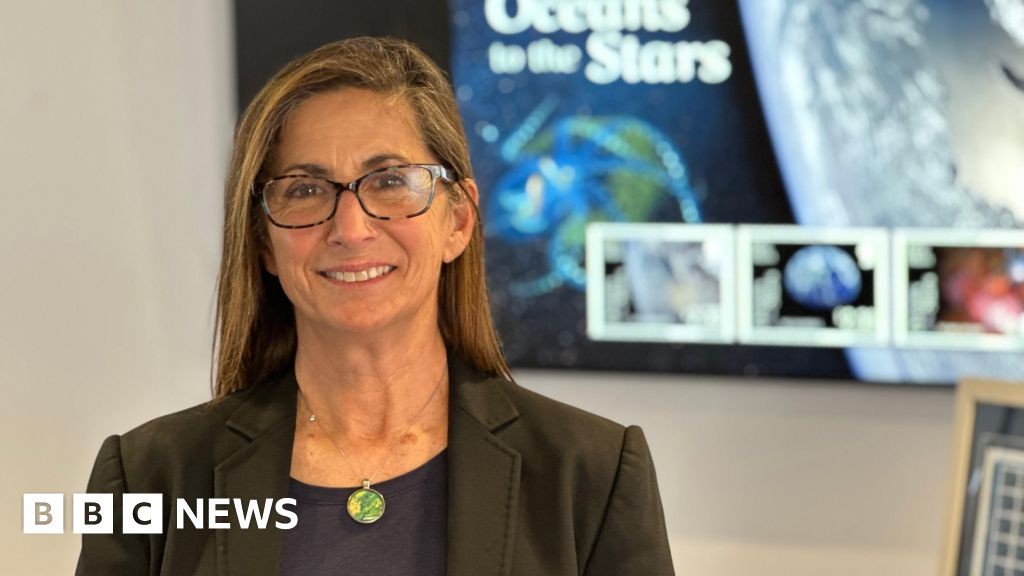
Retired NASA astronaut Nicole Stott has shared profound insights gained from her time in space, emphasizing the interconnectedness of life on Earth and the urgent need for global cooperation in planetary stewardship. Stott, who spent 104 days aboard the International Space Station, including a spacewalk, and made history as the first person to speak Manx Gaelic in orbit while painting with watercolors, now advocates for a shift in perspective: viewing all people as crewmates responsible for the health of their shared spaceship, Earth.
The Overview Effect and the Value of Perspective
Stott recounts that witnessing Earth from space fundamentally altered her perception. “Looking out the window, there’s no denying that,” she stated, referring to the stark reality of a fragile planet suspended in the vastness of space. This experience, often called the “overview effect”, is known to induce a deep sense of humility and interconnectedness in astronauts. The astronaut’s perspective highlights how easily humanity forgets its shared residence on a finite world.
Deep Sea Connections: A Parallel Perspective
Stott’s recent collaboration with the Isle of Man Post Office on a stamp collection linking space and deep-sea imagery further reinforces this message. The stamps, accompanied by Stott’s essays, intentionally evoke an “otherworldly feel” to encourage viewers to recognize the parallels between exploring the cosmos and understanding Earth’s oceans—both representing the ultimate frontiers.
From Passengers to Crewmates
The core of Stott’s message is a call to action: “I really feel like we need to remind ourselves of how important it is to be crewmates on our planetary spaceship too.” She stresses that the mindset of a “passenger” – one who consumes without considering the consequences – must shift to that of a “crewmate” who actively maintains and protects the vessel. This isn’t just about environmentalism; it’s about survival.
Appreciation Without Leaving Earth
Stott concludes that recognizing Earth’s beauty and fragility doesn’t require space travel. The lesson from her experiences is clear: the same sense of wonder and responsibility can be cultivated by simply changing one’s perspective. The universe doesn’t need to be seen from above to be understood; the connection is already there.
“You don’t need to leave the planet to appreciate it.”
Stott’s message serves as a reminder that the greatest adventure isn’t necessarily leaving Earth, but learning to live on it sustainably and as a unified crew.