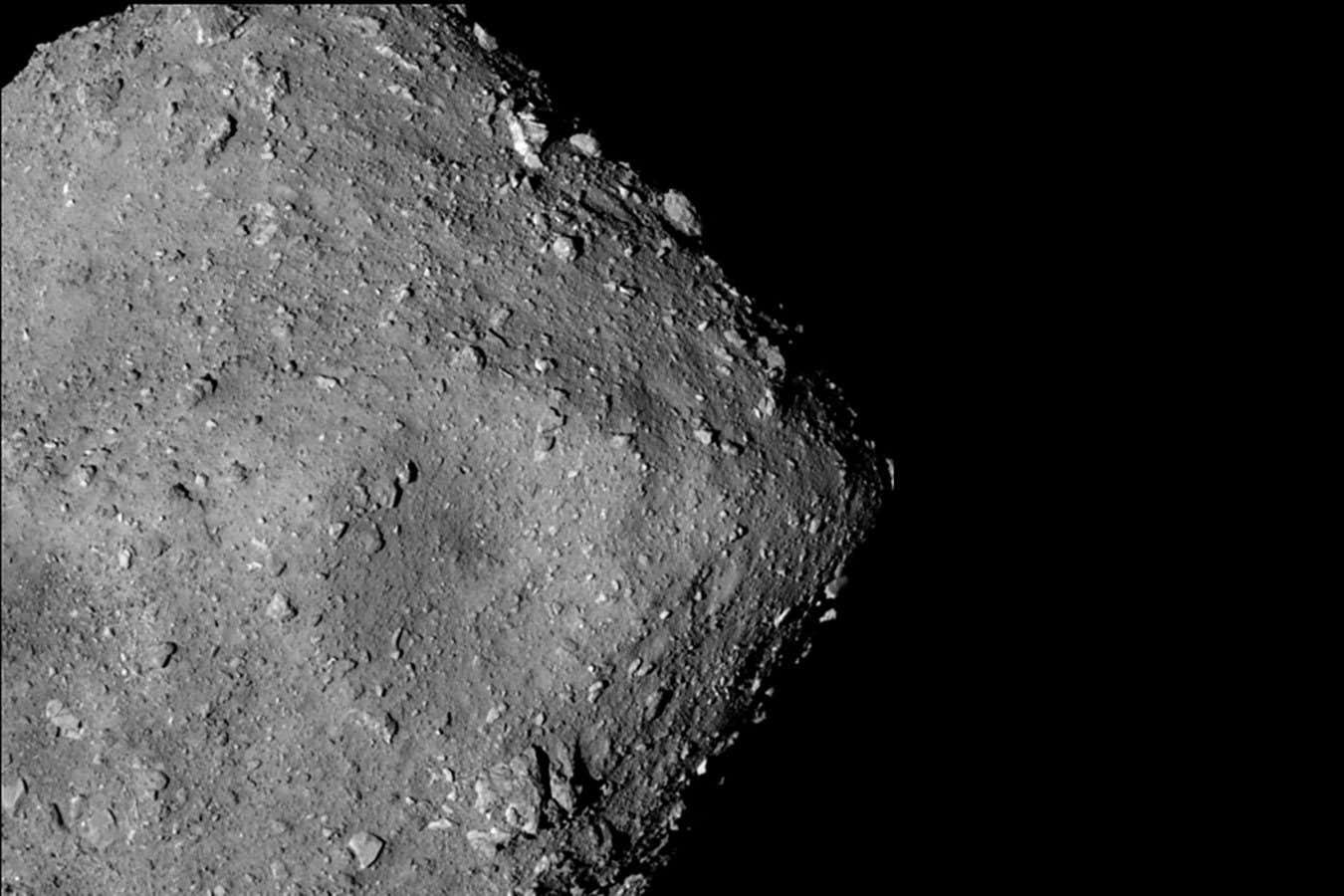
Samples collected from the asteroid Ryugu confirm the presence of all five nucleobases – the fundamental building blocks of DNA and RNA. This discovery reinforces the theory that asteroids played a critical role in delivering the chemical foundations for life to Earth billions of years ago.
The Hayabusa2 Mission and Sample Collection
In 2018, Japan’s Hayabusa2 spacecraft successfully visited Ryugu, a near-Earth asteroid. To collect pristine material, the spacecraft fired two projectiles (small and large) into the asteroid’s surface. The resulting debris was then collected and returned to Earth in 2020 for detailed analysis. This method ensured that the samples weren’t contaminated by Earth-based materials.
Nucleobases Found in Both Surface and Subsurface Samples
Researchers led by Yasuhiro Oba at Hokkaido University in Japan examined two distinct samples: one from Ryugu’s surface and another excavated by the projectiles. Both samples contained all five primary nucleobases, essential for forming DNA and RNA when combined with sugars and phosphoric acid. This is not the first time these compounds have been found in extraterrestrial materials; they’ve also been detected in meteorites and samples from the asteroid Bennu.
Tracing Asteroid Origins with Nucleobase Abundances
The team noted variations in the abundance of each nucleobase across the samples. This variation suggests that analyzing these compounds could help trace asteroids and meteorites back to their original parent bodies. Understanding these abundances may also shed light on how these parent bodies evolved over time.
Implications for the Origins of Life
The repeated detection of nucleobases in asteroid samples – Bennu, and now Ryugu – strongly suggests that these molecules are widespread throughout the solar system. If asteroids are indeed rich in the building blocks of DNA, they may have seeded Earth with the precursors to life billions of years ago. According to Oba, “Their detection in Ryugu strongly supports their ubiquity in the solar system.”
Beyond Nucleobases: The Potential for Complex Organic Molecules
It is plausible that asteroids also harbor more complex organic molecules, including fully formed nucleic acids (DNA and RNA). Oba suggests that “It is very likely that more complex organic molecules like nucleic acids are formed on asteroids,” further enhancing their importance in the early development of life on Earth.
The presence of these compounds in asteroids strengthens the hypothesis that these space rocks were crucial for delivering the initial ingredients for life to our planet.