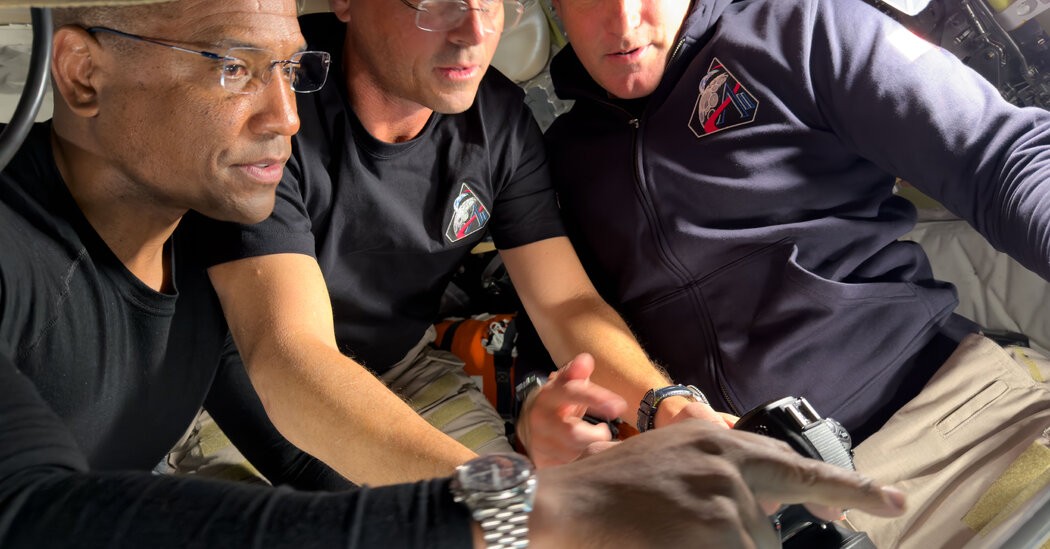
After a 10-day journey that pushed the boundaries of human exploration, the Artemis II mission is preparing for its final, most critical phase: the return to Earth. The crew—comprising NASA astronauts Reid Wiseman, Victor Glover, and Christina Koch, along with Canadian Space Agency astronaut Jeremy Hansen—is currently on course for a Pacific Ocean splashdown.
This mission is not merely a flight; it is a milestone in human history. It marks the first time humans have ventured into deep space in over 50 years, breaking distance records and testing the very systems that will eventually allow us to live and work on the Moon.
The Final Descent: What to Expect
The return of the Orion spacecraft is a high-stakes sequence of events. Because the crew is traveling at incredible speeds, the transition from space to Earth requires precision and extreme durability.
The Splashdown Timeline (All times Eastern):
– 7:33 p.m.: The crew capsule separates from the service module (which provides power and propulsion).
– 7:37 p.m.: The capsule fires its thrusters to lock onto a precise landing trajectory.
– 7:53 p.m.: The capsule hits Earth’s upper atmosphere at nearly 24,000 mph.
– 8:07 p.m.: Expected splashdown in the Pacific Ocean, west of San Diego.
Note on Re-entry Risks: While NASA maintains that the spacecraft’s heat shield is sufficient for the mission, the descent remains a point of intense scrutiny. NASA has adjusted the return trajectory to mitigate known flaws in the thermal protection system, though some aerospace experts have expressed concerns regarding the decision to proceed with the flight.
A Mission of Firsts and Records
Artemis II has been defined by its “superlatives,” breaking several historical barriers:
* Diversity in Space: The crew includes the first Black man (Victor Glover) and the first woman (Christina Koch) to travel around the Moon, as well as the first Canadian astronaut (Jeremy Hansen) to undertake the journey.
* Distance Records: The crew surpassed the record set by Apollo 13 in 1970, reaching a peak distance of 252,756 miles from Earth.
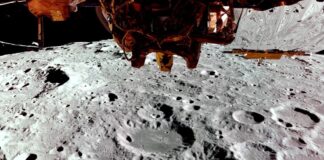
* New Frontiers: For the first time, humans have visually observed parts of the lunar far side that remained in shadow during the Apollo era.
Beyond the Sightseeing: Testing the Limits
While the mission captured stunning imagery—including a 53-minute solar eclipse and new geological data—it served primarily as a rigorous laboratory in deep space. The crew faced real-world challenges that provided vital data for future lunar landings:
- Life Support & Gear: The astronauts tested new orange spacesuits designed to provide up to six days of life support in an emergency.
- System Troubleshooting: The mission was not without “human” problems; the crew had to manage communication glitches and technical issues with the first toilet designed for deep space, highlighting the need for specialized IT and plumbing expertise in long-term spaceflight.
- Operational Readiness: From practicing CPR in microgravity to testing docking maneuvers, the crew proved that the Orion spacecraft’s propulsion and life-support systems can sustain humans far from Earth.
How to Watch the Return
NASA will provide live coverage of the splashdown starting at 6:30 p.m. ET. You can follow the event via:
* NASA’s Official Website
* YouTube and X (formerly Twitter)
* Smart TV Apps
Please note: While a sonic boom may be heard in parts of Southern California during re-entry, the spacecraft itself will likely not be visible to the naked eye due to its entry angle over the Pacific.
Conclusion
Artemis II has successfully bridged the gap between Earth’s orbit and deep space, proving that humanity can navigate the lunar environment. As the crew prepares to splash down, the mission stands as a definitive stepping stone toward a permanent human presence on the Moon.