NASA is preparing to launch the Artemis II mission, a landmark 10-day flight carrying four astronauts on a loop around the moon and back. This will be the first crewed mission beyond Earth orbit since 1972, serving as a vital test run for future lunar landings planned for later this decade. The mission isn’t just about technology; it’s about reigniting public imagination and proving that human space exploration is possible.
The Crew and the Goal
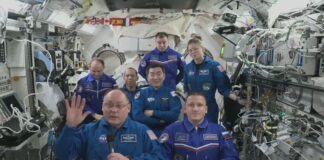
The Artemis II crew consists of Reid Wiseman, Victor Glover, Christina Koch (all NASA astronauts), and Jeremy Hansen of the Canadian Space Agency. Their primary objective is to verify the Orion spacecraft’s life-support, navigation, communications, and flight systems in deep space. While the journey itself won’t land on the moon, it will push the spacecraft and its systems to their limits in preparation for more ambitious lunar missions.
Launch and Initial Orbit (Days 1–2)
The mission is slated to launch aboard NASA’s powerful Space Launch System (SLS) rocket, generating over 8.8 million pounds of thrust. Within eight minutes of liftoff, the rocket will shed its boosters and core stage, placing Orion into an initial Earth orbit. From there, the spacecraft will maneuver into a highly elliptical orbit, keeping the crew within range for a quick return in case of emergencies. The crew will then manually test critical systems, including communications and life support, while still orbiting Earth.
Translunar Injection and Deep Space (Days 2–5)
On Day 2, Orion will fire its main engine in a maneuver known as translunar injection (TLI). This burn will send the spacecraft on a four-day trajectory toward the moon. The course is designed to take advantage of gravitational forces for a natural return path, meaning the spaceship will loop around the moon and head back to Earth even if later engine burns fail. Astronaut Koch notes that the TLI burn is also effectively the deorbit burn, highlighting the inherent risks and precision required. As Orion travels further from Earth, the crew will conduct system checks, emergency procedures, and radiation exposure tests.
Lunar Flyby and Far-Side Observations (Day 6)
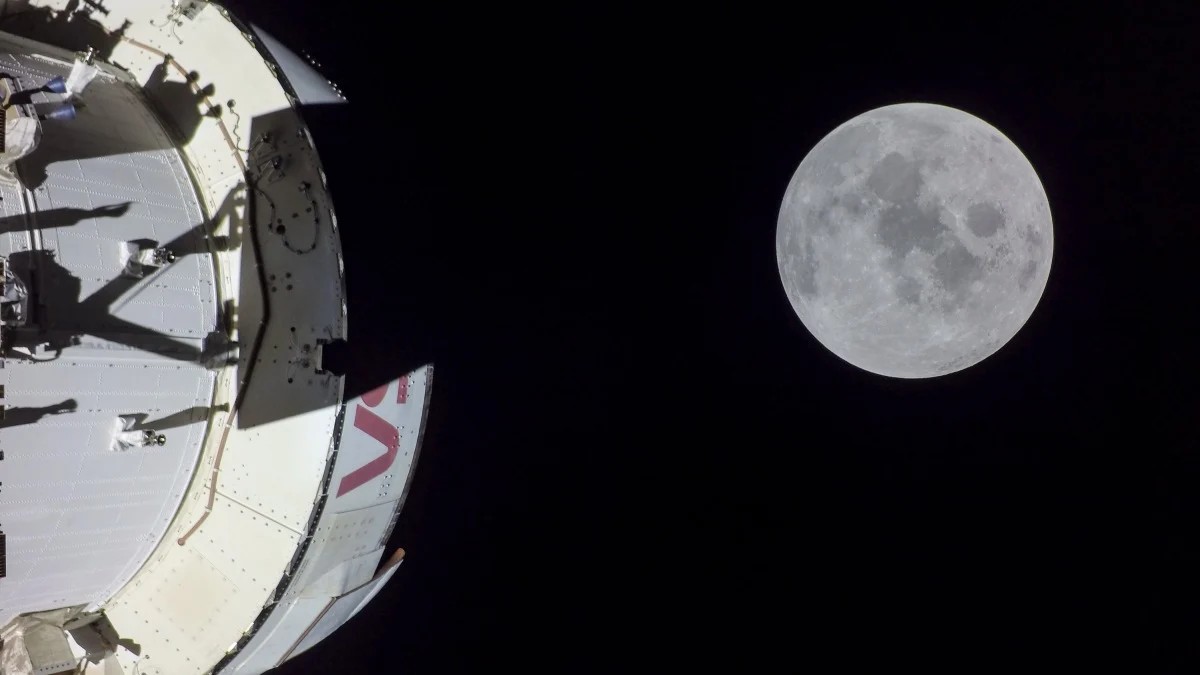
Orion will pass within 4,000–6,000 miles of the lunar surface, giving the crew stunning views of the moon. During this phase, the spacecraft will temporarily lose contact with Earth as it flies behind the moon, providing an opportunity to observe and photograph the far side. This is also when the crew could break the distance record set during the Apollo 13 mission, traveling farther from Earth than any human before them.
Return to Earth (Days 7–10)
After rounding the moon, Orion will rely on gravity to guide it back to Earth. The crew will continue system tests, including manual piloting exercises and further radiation shielding assessments. As the spacecraft approaches Earth, the service module will detach and burn up in the atmosphere, leaving only the crew capsule to survive reentry. Orion will enter at extreme speeds, heating to 3,000°F, before deploying parachutes for a splashdown off the coast of San Diego, California. U.S. Navy recovery teams will retrieve the capsule and crew within hours.
Artemis II represents not just a technological feat but a symbolic step forward in human space exploration. By proving the reliability of Orion and its systems, NASA is laying the groundwork for sustained lunar presence and, ultimately, missions beyond our moon.