The James Webb Space Telescope (JWST), a groundbreaking instrument for astronomical observation, recently faced a challenge – blurry images from a key component. Fortunately, a team of Australian researchers developed an artificial intelligence (AI) algorithm that successfully addressed this issue, marking a major victory for the scientific community eager to leverage the telescope’s capabilities in the search for exoplanets within our Milky Way galaxy.
The Problem: Blurry Images from a Specialized Instrument
The blurry images originated from the Aperture Masking Interferometer (API), an instrument not one of JWST’s four main tools, but rather a device that enhances the capabilities of one of them—the Near-InfraRed Imager and Slitless Spectrograph (NIRISS). API works by combining light from different sections of JWST’s main mirror, boosting the instrument’s ability to detect faint and distant objects, especially small exoplanets circling other stars.
However, after the instrument was turned on, the resulting images were noticeably out of focus, echoing a significant optical flaw encountered by JWST’s predecessor, the Hubble Space Telescope. In 1990, Hubble was found to be near-sighted due to imperfections in its primary mirror, requiring a costly and complex mission to install corrective mirrors in orbit.
Why a Fix Was So Difficult – and Why Humans Couldn’t Help
Addressing the issue with JWST proved far more challenging than with Hubble. While Hubble orbits just 320 miles above Earth—a relatively accessible location—JWST resides at a distance of 930,000 miles (1.5 million km). This vast distance—more than three times the distance to the moon—means that no human space mission has ever been sent so far, effectively ruling out a physical repair.
The AI Solution: A Neural Network Called AMIGO
The source of the blurriness was traced to electronic distortions within JWST’s infrared camera detector. To overcome this hurdle, former University of Sydney Ph.D. students Max Charles and Louis Desdoigts created a neural network, a type of AI algorithm mimicking the human brain. This algorithm, named AMIGO (for Aperture Masking Interferometry Generative Observations), efficiently identifies and corrects pixels affected by electrical charges, thereby refining the distorted observations.
“Instead of sending astronauts to bolt on new parts, they managed to fix things with code,” Tuthill said in a statement.
Remarkable Results and Expanded Capabilities
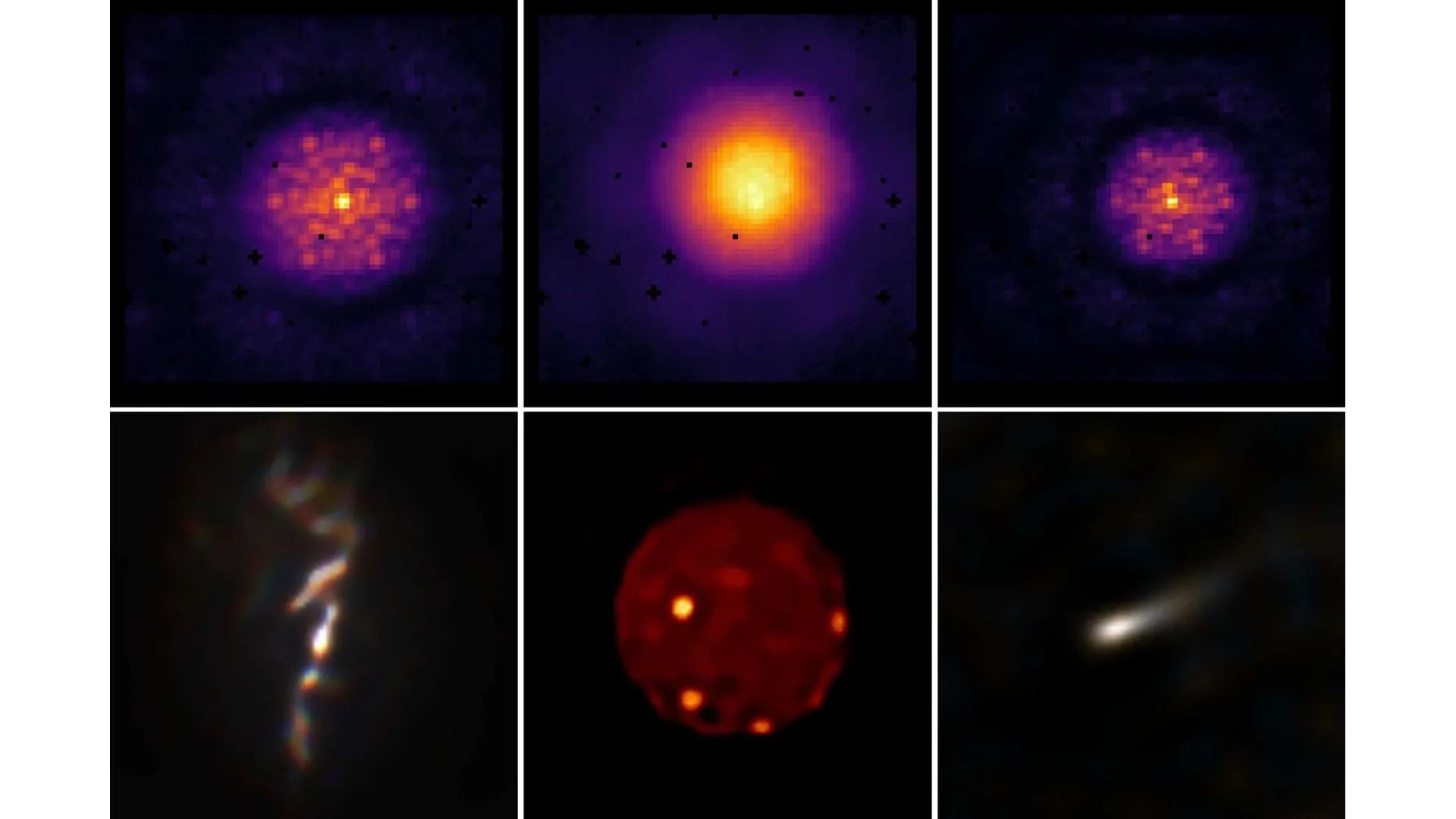
The AMIGO algorithm has proven highly effective. The researchers demonstrated its capabilities by sharpening images of a faint exoplanet and a cool, low-mass star situated 133 light-years from Earth. Subsequent imaging campaigns, with API working alongside AMIGO, produced detailed images of a black hole jet, the volcanic surface of Jupiter’s moon Io, and stellar winds emanating from a distant, variable star.
“This work brings JWST’s vision into even sharper focus,” Desdoigts, now a postdoctoral researcher at Leiden University in the Netherlands, said in the statement. “It’s incredibly rewarding to see a software solution extend the telescope’s scientific reach.”
The James Webb Space Telescope has revolutionized astronomy since becoming operational in July 2022, providing unprecedented insights into the formation of early galaxies and black holes. With the API component now fully functional thanks to the AI solution, JWST is poised to unlock even more groundbreaking discoveries and advance our understanding of the universe.