


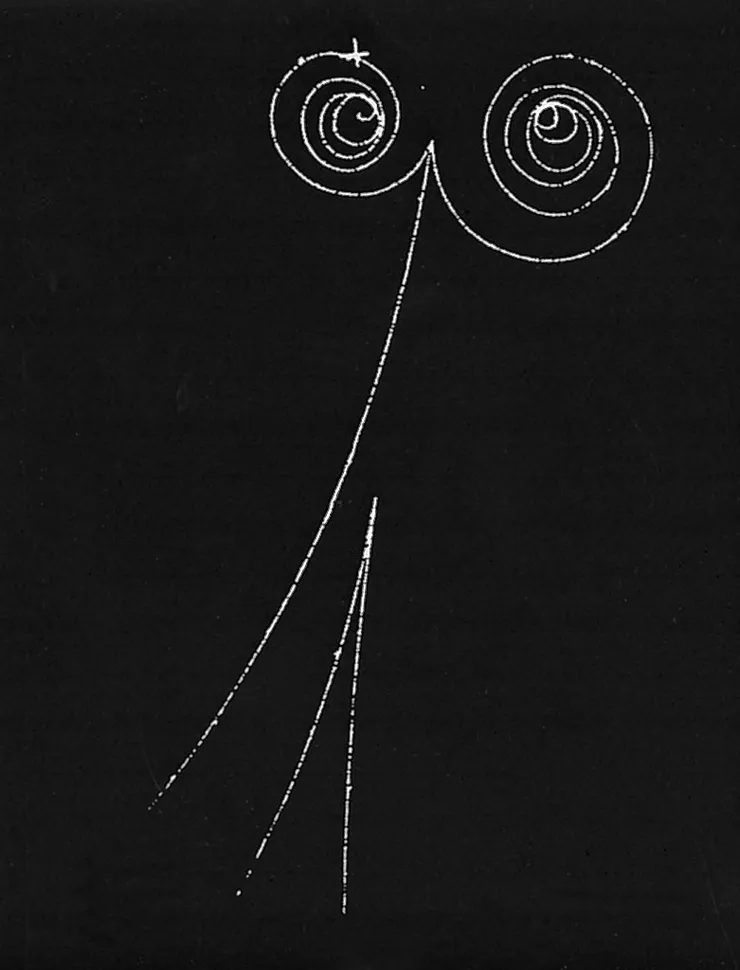
An atom is not a solid sphere. It is mostly empty space held together by a chaotic dance of invisible components. For centuries, people assumed that matter was continuous, indivisible. That changed in 1897. J.J. Thomson discovered the electron. Then in 1911, Ernest Rutherford showed that an atom has a nucleus. Small, heavy core. Surrounded by an electron cloud.
The atom was composite. Fragile. Not fundamental.
In the 1930s, physicists believed they had reached rock bottom. They discovered that the nucleus was made up of protons and neutrons. Simple enough. Two particles. Done. They were wrong. The 1970s shattered this illusion. Protons and neutrons are not elementary. They are made up of quarks.
Quarks are the real building blocks. Together with leptons, they form the basis of all physical matter. But there is a third group. Bosons. These particles do not form matter. They transmit forces. They glue the universe together.
Standard Model of Matter
The list of subatomic particles has grown exponentially. More than 200 distinct types have been found in laboratories around the world. This is not a small list. It’s a zoo. And almost every particle has a mirror image. Antiparticle.
This brings us to the core concept of subatomic particles. These are self-contained units of matter and energy. They are the smallest pieces that we can isolate. They carry charge. They have mass. Or they don’t. They spin. They interact.
Why is this important? Because everything you touch is just a stable arrangement of these fleeting entities. Your hand consists mainly of leptons and quarks, held apart by the exchange of bosons. The solidity of a table is an illusion created by electromagnetic repulsion.
Forces and antimatter
Bosons are messengers. Photons transmit the electromagnetic force. Gluons hold quarks in protons. W and Z bosons govern weak nuclear decay. Without them, the atoms wouldn’t stick together. Stars would not burn. Life would not exist.
Then there is the issue of antimatter. Every electron has a positron. For every quark there is an antiquark. They have the same mass. Opposite charge. When they meet, they annihilate. Total conversion of mass into energy. Pure light.
This symmetry is not just academic. It defines the balance of the cosmos. Why is there more matter than antimatter? That’s a question for another time. But the detection of these particles confirms one thing: reality is layered. Deep. Complex.
We are looking for elementary particles to understand the code of the universe. We find quarks. leptons. Bosons. More than 200 entries in the ledger. For most of them, the antiparticles are waiting in the wings.
It’s not a neat system. It’s chaotic. Quantum. Probabilistic. But it works.


