


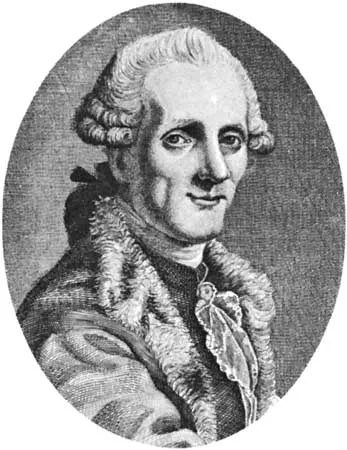
Niccolò Piccinni was more than just a composer of the Neapolitan school. He was a giant who could convey a sense of comedy and serious drama with equal accuracy. But a century after his death, history has made him a stinging footnote, Gluck’s rival.
Piccinni was born in Bari in 1728 and grew up in Naples. His early masterpiece? La buona figliuola (1760). This work, also known as “La cecchina”, changed the game. The screenplay was written by Goldoni and is based on the novel “Pamela” by Samuel Richardson. This is not your typical comic “opera fan”. It combines sentimental and serious themes into a flexible musical structure. Think of this as a prototype that Mozart later perfected.
Fast forward to 1776. The Paris Opera is a powder keg. Piccinni was especially invited to France by the supporters of the Italian style to oppose Christoph Willibald Gluck’s reforms. This is not just a recruitment decision. This is a declaration of war. Piccinni was once again embroiled in the “Querre de Buffon”, a decades-long conflict between Italian and French opera troupes.
This is where things get messy. In fact, Piccinney admired Gluck’s work. He refused to incite his supporters. But Paris did not mind his diplomacy. Every group needs a villain and a hero. So they created it.
This competition has become toxic. The works of each composer are dissected and compared unfavorably with the works of other composers. Although their goals were radically different, the public saw them as boxers in the ring. Piccinni stuck to the traditional structure of the distinctive aria and recitative. Gluck was busy dismantling it for the opera reform.
Tensions came to a head when they were asked to compose the opera “Iphigenie en Tauride” with the same mythical theme. Sarcasm? Gluck’s version premiered in 1779, and Piccinni’s soon after in 1781. He had been promised that his version would be performed first. Rather, Gluck’s success overshadowed him.
When Gluck left Paris in 1779, Piccinni tried to continue his work. But the political winds have changed. The French Revolution spread throughout the country. In 1789, Piccinney was relieved of his duties at the Royal Academy of Music. The revolution doesn’t care about opera stars.
He spent 4 years under house arrest just because he had a tendency to ジョバン派.
In 1798, pitch came back to Paris. He wanted to create again. He wants to direct. But political anxiety continued, and his health condition worsened. He was unable to get his last bow. He died in 1800 in Paris, leaving a legacy that is often defined not by who he was, but by who he was.


